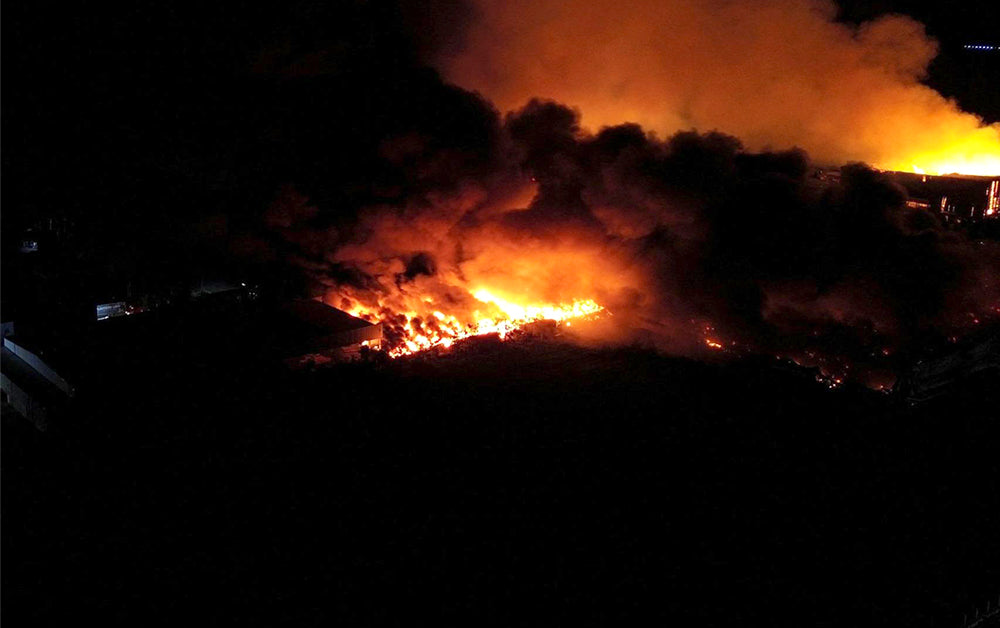
This tragedy is a stark reminder that whether it’s a wildfire or a kitchen fire, every second counts. Fast, reliable detection can mean the difference between safety and catastrophe.
The Rising Stakes: Home Fires in the U.S.
1. Residential fires remain frequent: According to FEMA’s United States Fire Administration, there were an estimated 344,600 residential building fires in 2023. Among residential fires, cooking is the leading cause, accounting for nearly 49% of those incidents.
2. The cost is steep: In 2023, property damage from residential fires was estimated at $11.3 billion, with an average restoration cost of ~$27,175 per home.
3. Wildfire season intensifies risk: In 2025 alone, more than 4.7 million acres have already burned across the U.S. The Eaton Fire in L.A. destroyed or damaged over 9,400 structures, with costs estimated at $27.5 billion.
4. In states like California, new “zone zero” wildfire regulations are now mandating homeowners to clear combustible materials within 5 feet of their homes in fire-prone areas. This local push highlights how closely intertwined wildfire risk and home fire safety have become.
All of this means homes today face greater danger—from sparks inside and embers outside. In this context, smoke alarms must work fast, reliably, and with minimal false triggers.

Why the U.S. Sets Such a High Bar
American smoke alarm standards are exceptionally rigorous, and for good reason. Poorly performing alarms can do more harm than good:
1. False alarms from cooking smoke or steam are the leading reason people disable their devices. Once trust is lost, protection vanishes.
2. Modern homes burn faster. Synthetic furnishings and open layouts create new fire behaviors that demand faster, smarter detection.
3. Regulatory and legal frameworks: Investigators and insurers scrutinize whether certified alarms are installed. Non-certified devices may affect insurance claims or compliance with local building requirements.
4. Most state and local building codes reference UL 217 (or equivalent) as the required standard for residential smoke alarms—creating a consistent baseline for safety compliance nationwide.
5. Research-driven standards: Agencies like FEMA, NFPA, and NIST continuously refine smoke alarm requirements based on real-world data.
Together, these factors create an ecosystem where “good enough” simply isn’t enough—every certified alarm is held to a strict performance benchmark.

UL Certification: The Gold Standard for Smoke Alarm Safety
At the heart of U.S. smoke alarm standards is UL 217, the nationally recognized benchmark for alarm performance.
UL 217, one of the most recognized smoke alarm standards globally, evaluates how smoke alarms perform under both smoldering and flaming fires, as well as their resistance to nuisance alarms—ensuring consistent reliability in real-world conditions.
“UL” stands for Underwriters Laboratories, an independent safety science organization. A UL-listed alarm has undergone third-party testing to ensure it responds reliably to smoke, minimizes false alarms, and maintains performance over time.
In many ways, UL certification acts as a trust contract—linking the work of engineers to the safety of homeowners. It doesn’t make an alarm infallible—but it ensures every certified unit has met a consistent, independently verified safety threshold. Models such as the Siterwell GS525A, which is UL 217 certified, illustrate how certified devices combine proven reliability with accessible design—bringing professional-grade protection into everyday homes.

What This Means for Customers
For customers, strict standards translate into reliable protection. So what can customers do to ensure their alarms meet these strict standards?
1. Look for UL-certified or compliant alarms before buying.
2. Replace alarms every 10 years—sensors degrade, reducing sensitivity over time.
3. Install correctly: in each bedroom, outside sleeping areas, and on every floor.
4. Test monthly to maintain performance.
Strict standards only protect you if the device on your ceiling truly meets them.
The Bottom Line: Why Standards Build Trust
A UL-certified or compliant smoke alarm isn’t just a gadget—it’s the product of decades of fire science, engineering, and lessons learned from tragedy.
By insisting on rigorous standards, the U.S. has embraced a hard-earned truth: in fire safety, trust is built through testing—and protection begins with certified reliability. For families, it’s a reminder to choose alarms that aren’t just available—but proven, tested, and trusted.