
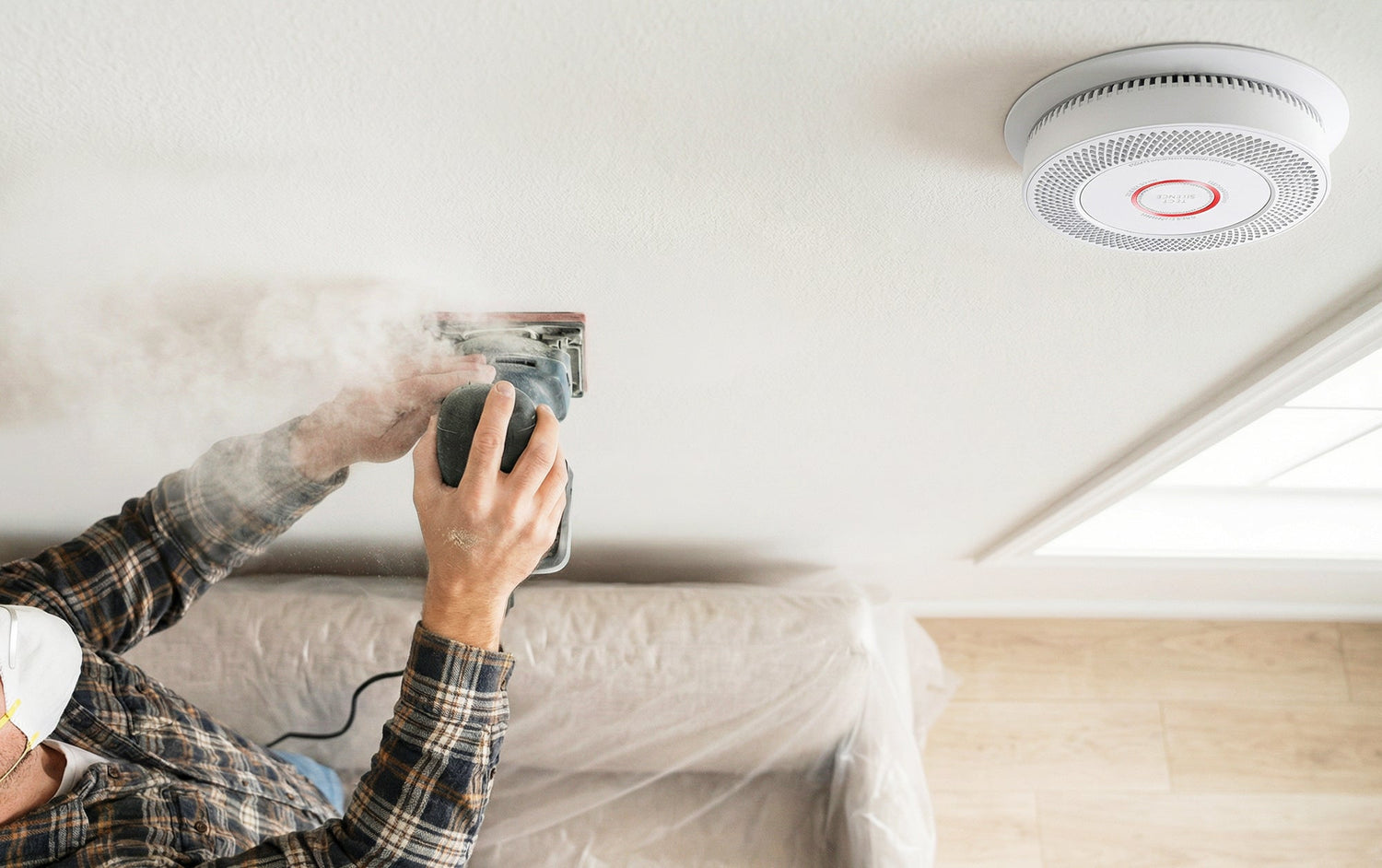
Spring is officially here, and for many American homeowners, that means one thing: Renovation Season. Whether you're finally tackling that kitchen backsplash or giving the nursery a fresh coat of paint, it’s the perfect time to refresh your space.
However, there’s an uninvited guest that often crashes the DIY party: The False Alarm.
If your smoke detector starts chirping or wailing in the middle of a project, it’s usually not because of a fire. It’s because the very things that make a renovation successful—sanding, painting, and sealing—are the same things that trigger modern alarm sensors.
Why Renovation Projects Trigger Smoke Alarms
During renovation, your home environment changes in ways that can easily confuse smoke alarms—especially modern, highly sensitive ones.
1. The Dust Factor
Sanding floors or drywall creates microscopic particles that linger in the air for hours. These particles settle inside the sensing chamber of your alarm, tricking it into thinking there’s smoke. Even worse, if dust settles on the sensor, it can cause intermittent chirping long after the project is done.
2. Paint Fumes & VOCs
Modern "Low-VOC" paints are better for your lungs, but the chemical off-gassing from oil-based primers, stains, and floor sealants can still trigger sensitive alarms. In a closed space with poor ventilation, these concentrated vapors are a recipe for a 2:00 AM wake-up call.
3. The "Closed Room" Trap
We often seal off rooms with plastic sheeting to contain the mess. While great for your carpet, this creates a pressurized environment with zero airflow. Trapped particles have nowhere to go but up—directly into your ceiling-mounted detectors.

How to Prevent False Alarms Without Risking Your Safety
Never simply remove the batteries and forget about them. That is the leading cause of home fire tragedies during renovations. Instead, follow these pro tips:
1. Use Dust Covers (With Caution): Most new alarms come with a plastic "construction cover." If you still have yours, snap it on only during work hours.
2. The "Fan & Filter" Method: Place a box fan in the window, blowing outward to create negative pressure. This pulls dust and fumes away from your hallway alarms.
3. Clean Before Re-Arming: Once the dust settles, use a vacuum attachment or a can of compressed air to gently clean your alarms. This prevents "phantom" alarms next week.
4. Use the Silence Feature: Most modern alarms include a temporary silence function that reduces sensitivity for a short period.

When to Call the Pros?
If your alarm continues to beep after you've cleaned it and finished painting, the sensor may be "contaminated." Upgrading to a modern, reliable alarm—like a Siterwell smoke or smoke & CO combo alarm—can help reduce nuisance alarms while maintaining dependable protection.


