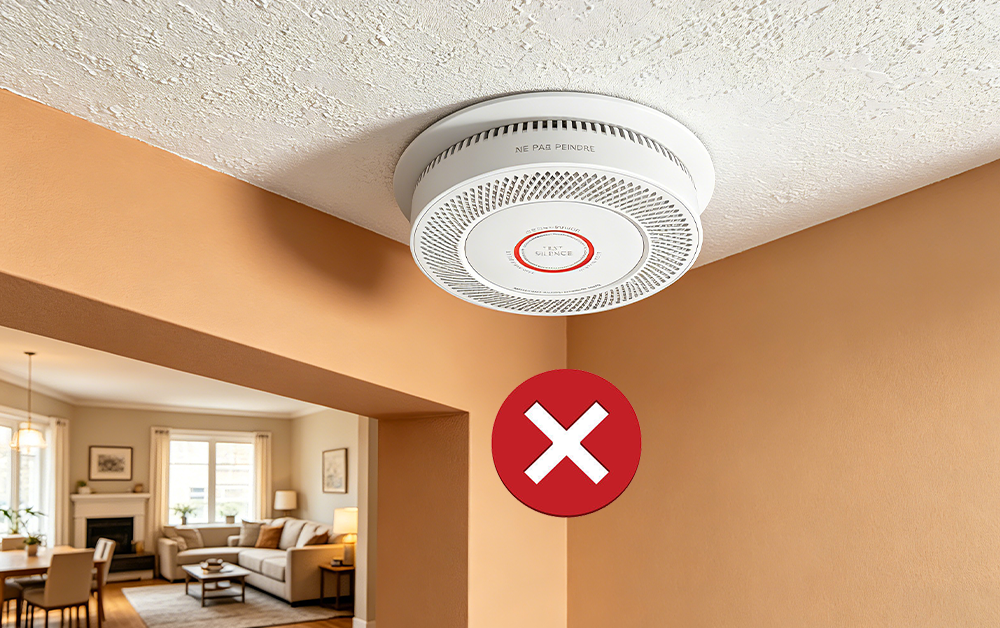
When it comes to home safety, simply buying a high-quality smoke or carbon monoxide (CO) alarm is only half the battle. The other half? Placement. According to data, many homeowners unknowingly install their devices in "dead air" spaces or skip critical areas like the basement or guest suite. Are you making these common mistakes? Let’s walk through the "Right Way vs. Wrong Way" of alarm installation to ensure your family is truly protected.
1. The "Dead Air" Trap: Corner Placements
Many people tuck alarms deep into the corners where the wall meets the ceiling, thinking it looks neater. This is a major mistake.
The Issue: Smoke and heat travel in a way that often misses tight corners, creating a pocket of "dead air" where the alarm won't trigger until the fire is already well-developed.
The Fix: Always install ceiling-mounted alarms at least 4 inches away from any wall. If you’re mounting on a wall, place it 4 to 12 inches down from the ceiling.

2. Forgetting the "Sleeping Sanctuary"
Did you know that most home fire fatalities happen at night?
The Issue: Having one alarm in the hallway isn't enough if your bedroom door is closed. The sound might not be loud enough to wake you, or smoke might not reach the hallway alarm quickly enough.
The Fix: Follow the "One in Every Bedroom" rule. You need a smoke alarm inside every sleeping room, one outside every sleeping area, and at least one on every level of the home (including the basement).
3. Kitchen "False Alarm" Fatigue
We’ve all been there: you sear a steak, and the alarm goes off. Many homeowners react by taking the batteries out or moving the alarm too far away.
The Issue: Installing a smoke alarm directly above the stove or too close to a bathroom shower leads to "nuisance alarms" from steam or cooking fumes.
The Fix: Smoke alarms should be at least 10 feet (3 meters) away from cooking appliances. For CO alarms, avoid placing them right next to fuel-burning appliances like the furnace or water heater; give them about 5 to 20 feet of breathing room.
Consider using photoelectric smoke alarms, which are less prone to false alarms from cooking.

4. Ignoring the Basement and Garage
In many American homes, the HVAC system, water heater, and laundry are tucked away in the basement or garage.
The Issue: These are high-risk zones for electrical fires or CO leaks. If an alarm isn't there, you won't know there's a problem until it spreads to the living room.
The Fix: For the basement, install at least one smoke alarm on the ceiling near the bottom of the stairs. For the garage, the smartest move is to install the alarm just inside the door leading from the garage to the house. This creates a "safety shield" that alerts you the moment smoke tries to enter your living space.

5. Mounting Near Fans or Air Vents
The Issue: Placing an alarm near a ceiling fan, air conditioner, or a drafty window can actually blow smoke away from the sensor, delaying the alert.
The Fix: Keep alarms at least 3 feet away from the path of supply air vents or the tip of a ceiling fan blade.
Quick Checklist: Did You Get It Right?
1. Every Level: Is there an alarm on every floor, including the basement?
2. Interconnected: If one goes off, do they all go off? (Highly recommended for modern US homes).
3. The 10-Year Rule: Is your alarm less than 10 years old? If not, it’s time for an upgrade.

Proper installation is the difference between a minor scare and a tragedy. Take 10 minutes today to walk through your home and check your placements. Your peace of mind is worth it.