The Lease Fine Print Most Renters Skip
A 26-year-old in Ohio signs a lease, hauls in a dozen boxes, and notices the smoke alarm in the hallway is dangling by one screw with the battery compartment hanging open. She assumes the landlord will handle it "eventually." Three weeks later, a kitchen-towel fire during a late dinner fills the unit with smoke before anything chirps. That gap between move-in and "eventually" is exactly where renters get hurt. According to the National Fire Protection Association (NFPA), three out of five home fire deaths happen in properties with no working smoke alarms, and renters live in a disproportionate share of those homes. The hard truth is that a renter cannot wait for a landlord's calendar when the data shows fire makes its own schedule.
Renters occupy roughly a third of U.S. housing, yet they often inherit the oldest, most neglected fire-safety equipment in the building. A battery-operated smoke alarm that the previous three tenants ignored. A hardwired smoke detector painted over during a quick turnover. A missing carbon monoxide alarm in a unit with a gas furnace one floor down. The good news is that renters have more rights, and more low-cost options, than most realize. What follows is a practical walkthrough of who is legally responsible for what, how to verify a unit is actually protected, and which devices a tenant can add without violating a lease or losing a security deposit.
Who Is Legally On the Hook
In nearly every U.S. state, the landlord is required to install working smoke alarms before a tenant moves in, and in many states a carbon monoxide alarm is mandatory wherever there is a fuel-burning appliance or an attached garage. The split of responsibility usually breaks down like this:
- Landlord duties: Install code-compliant smoke detectors and, where required, a carbon monoxide alarm; ensure they function at the start of the tenancy; replace units that have reached end of life (typically 10 years for smoke alarms, 5 to 7 for many CO units).
- Tenant duties: Keep the alarms in place, test them, and replace batteries during the lease in most jurisdictions. Notify the landlord in writing if a device fails so the repair obligation shifts back to the owner.
The phrase "in writing" matters more than tenants think. A text or email creates a timestamped record. If a landlord ignores a documented request to repair a dead hardwired smoke detector, many state statutes allow the tenant to repair it and deduct the cost, or in serious cases to break the lease. Verbal complaints evaporate; written ones build a case. The U.S. Fire Administration (USFA) reports that the leading cause of smoke-alarm failure is a missing or disconnected power source, which is precisely the kind of defect a quick written notice can force a landlord to fix.
The Ten-Minute Move-In Fire Audit
Before the boxes are even unpacked, a renter can run a fast safety audit that takes less time than waiting for the elevator. It separates a genuinely protected unit from one that merely looks compliant.
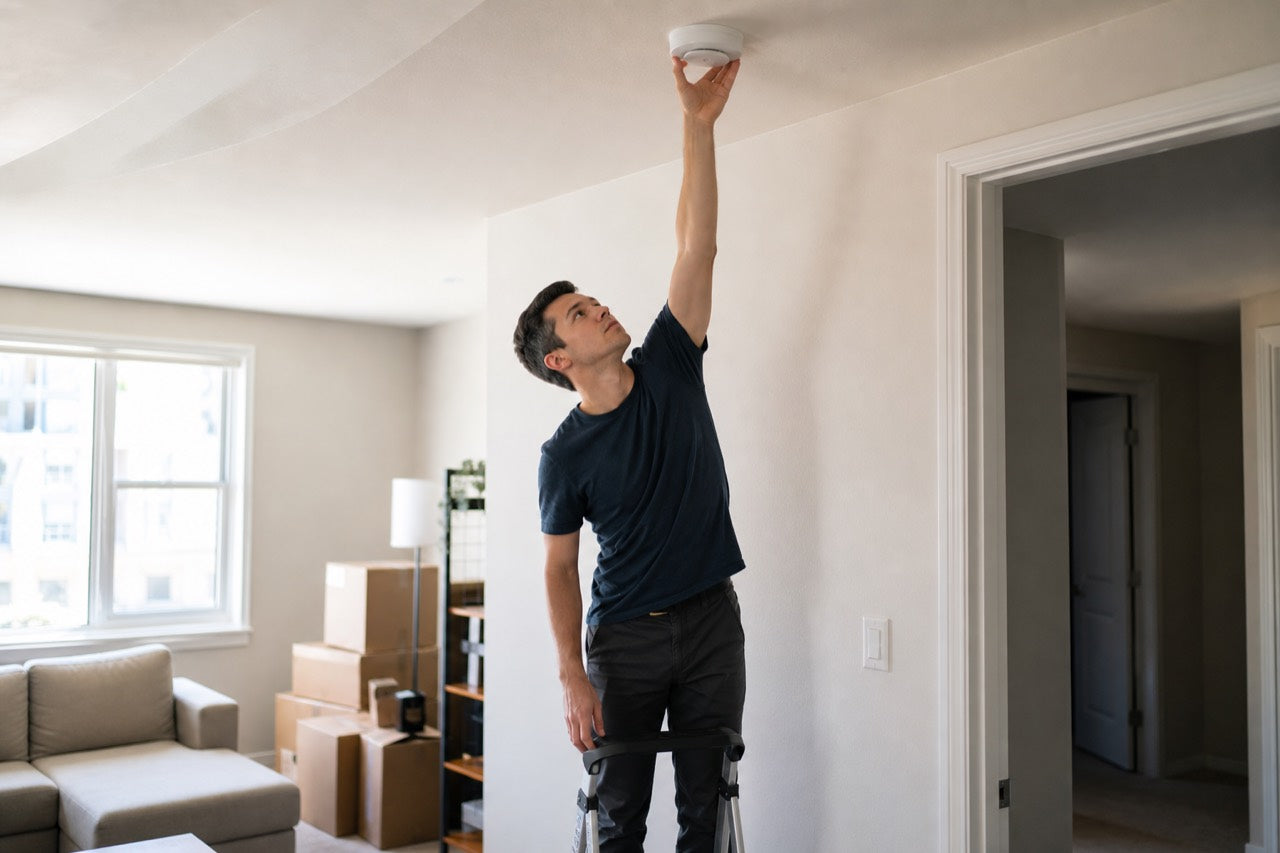
- Count the alarms. There should be a smoke detector inside every bedroom, one outside each sleeping area, and at least one on every level. A studio still needs one near the sleeping zone and one near the kitchen escape path.
- Press and hold the test button. A real alarm sounds loud and immediate. Silence, or a weak warble, means a dead battery or a disconnected hardwired smoke detector.
- Check the date. Every alarm has a manufacture date stamped on the back. Anything past its 10-year mark is legally expired, not "still kind of working."
- Find the CO coverage. If the building has gas heat, a gas stove, or an attached garage, a carbon monoxide alarm is not optional. Confirm one exists near the bedrooms.
- Photograph everything. Date-stamped photos at move-in protect the security deposit and document any pre-existing neglect.
If the audit turns up gaps, that written notice to the landlord goes out the same day. While waiting on a fix, a renter is not powerless, and that is where a few inexpensive devices change the math entirely.
What Renters Can Add Without Touching a Drill
The biggest myth among tenants is that improving fire safety means drilling holes, running wires, and forfeiting a deposit. It does not. The market for renter-friendly protection has matured, and most of it is genuinely tool-free.
A battery-operated smoke alarm is the obvious starting point because it needs no electrician and no landlord permission to supplement existing coverage. The smarter upgrade is a 10-year sealed battery alarm, which uses a non-replaceable lithium cell engineered to last the full life of the device. For a renter, the appeal is obvious: no 3 a.m. low-battery chirps, no annual battery shopping, and a unit that can travel to the next apartment when the lease ends. A combination smoke and CO alarm covers two threats from a single ceiling spot, which is ideal for a renter who wants maximum protection from minimum hardware.
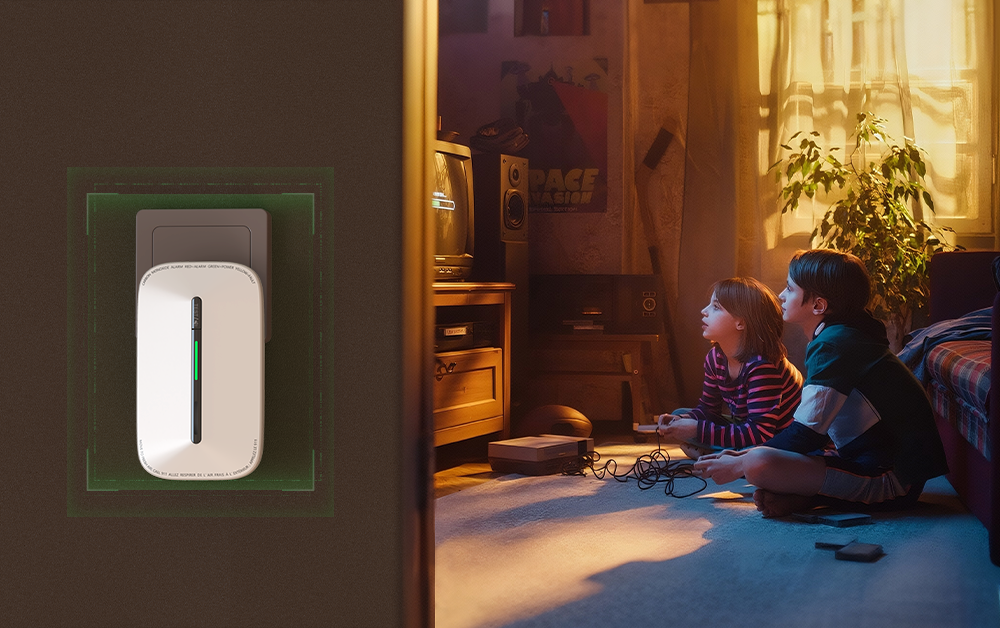
For bedrooms, a portable interconnected system is the quiet revolution in rental safety. Wireless interconnected smoke alarms talk to each other over radio signal, so when the kitchen unit detects smoke, the alarm beside the sleeping baby sounds at the same instant. No wiring, no landlord sign-off, no patched ceilings on move-out. The NFPA has long emphasized that interconnected smoke alarms dramatically improve escape time, because a fire that starts far from the bedrooms still wakes everyone at once rather than after the smoke has already spread.
- Renter-safe checklist: peel-and-stick or magnetic mounts that leave no holes; sealed-battery units that never need ceiling access; wireless interconnect to avoid wiring; a combination smoke and CO alarm to cut device count in half.
The Carbon Monoxide Blind Spot in Shared Buildings
Smoke is visible and frightening; carbon monoxide is neither, and that is what makes it the renter's quietest danger. In multi-unit buildings, a faulty furnace, a blocked vent, or an idling car in an attached garage can push odorless, colorless gas through shared walls and floors into a unit that has no fuel-burning appliance of its own. The Centers for Disease Control and Prevention attributes more than 400 unintentional, non-fire CO deaths in the United States each year, and apartment dwellers are squarely in the risk pool even when the source is two doors down.
A renter in a gas-heated building who assumes "the landlord handles that" is making an assumption with no detector behind it. A standalone carbon monoxide alarm, or a combination smoke and CO alarm, plugged in near the bedrooms closes that blind spot for the price of a couple of takeout meals. Placement matters: CO mixes evenly with air, so a unit at breathing height near sleeping areas is far more useful than one tucked behind a couch.
Turning Safety Into Leverage at Lease Renewal
There is a financial angle renters rarely exploit. Many renters insurance policies offer premium discounts for documented smoke and CO protection, and a tenant who installs and photographs a 10-year sealed battery alarm or an interconnected set can sometimes negotiate a lower rate. At renewal time, a paper trail of safety upgrades and written maintenance requests also strengthens a tenant's standing if a dispute ever arises. Fire safety, framed correctly, is not just protection; it is documentation that quietly works in the renter's favor.
The pattern across all of this is consistent. A renter who treats the move-in audit as routine, sends maintenance requests in writing, and adds a few tool-free devices is no longer dependent on a landlord's "eventually." Families with new babies, caregivers looking after elderly relatives, and roommates splitting a first apartment all gain the same thing: a few extra minutes when a fire or a CO leak does not announce itself. Those minutes are the entire game, and for a renter they cost less than a single month's coffee budget. Siterwell builds its battery-operated, sealed-battery, and combination smoke and CO alarms specifically for households that need protection they can install themselves and take with them when the lease is up.