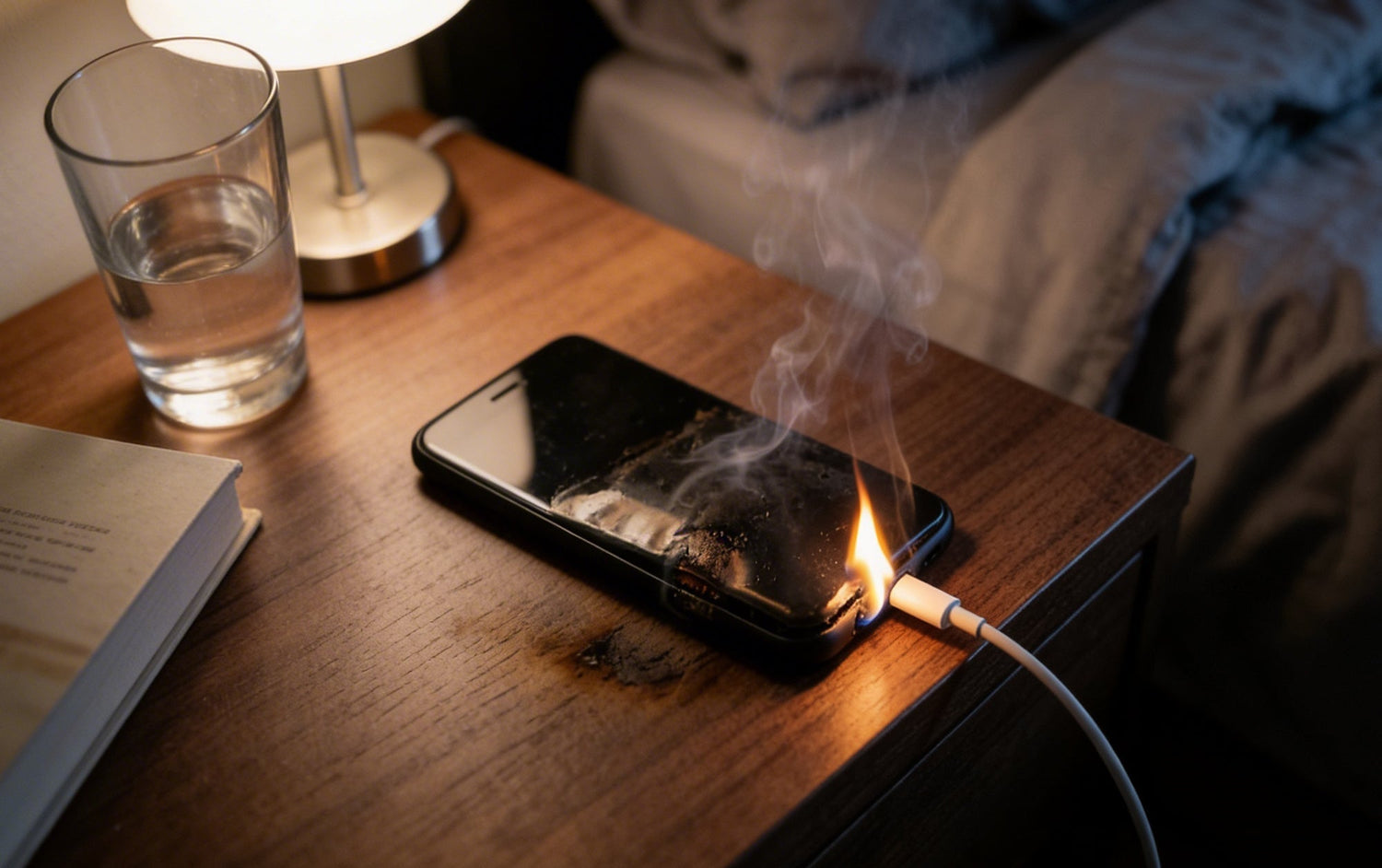
“The power bank in your pocket could become the fastest-growing fire risk in American cities.”
That statement may sound dramatic — but recent data from fire departments across the United States suggests it’s not far from the truth. From e-bikes and scooters to laptops, phones, and portable chargers, lithium-ion batteries power much of modern life. But when these batteries fail, they can suddenly ignite and spread fire faster than many people expect.
For homeowners and renters alike, understanding this risk — and knowing how early warning systems like smoke alarms work — is becoming an essential part of home safety.
The Growing Problem: Lithium Battery Fires in Major Cities
Many of these fires involve e-bikes, scooters, or replacement batteries, which are increasingly common in dense urban areas.

Real Lithium Battery Fire Incidents in the U.S.
Why are these fires so dangerous? Unlike a typical fire that starts with a slow smolder, a failing lithium battery can transition from early warning signs—such as hissing, swelling, or smoke—to intense flames within seconds. In many 2025 cases, residents reported having almost no time to react between the first sign of smoke and a full-room flashover.
Other incidents have injured firefighters and residents when battery packs overheated and exploded during charging or storage.
Can Smoke Alarms Detect Lithium Battery Fires?
Yes — and early detection is critical.
Even though lithium battery fires can escalate quickly, they usually produce smoke and gases in the early stages. Standard residential smoke alarms are capable of detecting this smoke, providing crucial early warning that can allow occupants to evacuate safely — even before flames spread.
Working smoke alarms can:
- detect smoke during the early stage of a battery failure
- provide crucial seconds or minutes to evacuate
- alert people in other parts of the home
Because many lithium battery fires begin during charging, it’s especially important to have smoke alarms installed near bedrooms, living areas, and spaces where devices are commonly charged. Smoke alarms with photoelectric sensors, like Siterwell’s home smoke alarms, are designed for reliable early detection, helping families stay safe in their homes.

The "Buy, Charge, Recycle" Safety Protocol
Living safely with lithium in 2026 boils down to three non-negotiable rules:
Buy Certified: Only purchase batteries and chargers with the UL (Underwriters Laboratories) or ETL seal. "Frankenstein batteries"—cheap, uncertified replacements found on discount sites—are the leading cause of 2025's structural fires.
Smart Charging: Never charge devices on "soft" surfaces like beds or couches. Heat cannot dissipate, leading to a meltdown. If possible, charge e-bikes and power tools in the garage or a dedicated area with a smoke alarm nearby.

(Label Source: New York State Department of State – Lithium-Ion Battery Model Tag Guidance)
What to Do If a Battery Starts Smoking
- Don't be a hero: Many fire departments warn that residents attempting to extinguish lithium battery fires themselves can be seriously injured. These fires burn extremely hot and may re-ignite unexpectedly.
- Evacuate immediately: These fires are too hot and too toxic for DIY solutions.
- Call 911: Mention specifically that it is a lithium battery fire so firefighters bring the necessary high-volume water equipment.
The power bank in your pocket isn't the enemy, but it does require a 2026 mindset for safety. Check your smoke detectors this weekend—it might be the most important five minutes of your year.