Why Portable Generators Become the Deadliest Appliance in the Home After a Storm
Picture a Florida family three days after a Category 3 hurricane. The power is out, temperatures inside the house are pushing 95°F, and the portable generator they purchased after the last storm is chugging away in the garage with the door cracked open a foot "for ventilation." They read the safety warnings. They know carbon monoxide is dangerous. They even bought a combination smoke and CO alarm last year. It is mounted on the kitchen wall, roughly twenty feet from the garage door. By 11 p.m., two members of that family are being loaded into an ambulance. The alarm never triggered. The detector was perfectly functional. The placement was the problem — and that distinction is the one most generator owners never think to question.
Every summer, as hurricane season intensifies and thunderstorm blackouts spread across the Midwest and Southeast, the same preventable tragedy plays out in thousands of American homes. The Consumer Product Safety Commission has tracked generator-related carbon monoxide deaths for decades, and the numbers do not suggest improvement. According to CPSC data, portable generators are the single leading cause of non-fire CO poisoning fatalities in the United States, responsible for roughly one-third of all non-fire CO deaths in a typical year. During major storm events, that number spikes dramatically: in the weeks following Hurricane Ida in 2021, the CPSC confirmed at least 18 generator-related CO fatalities in Louisiana alone.
The frustrating part — and this is where the dry irony sets in — is that most of those families owned a carbon monoxide alarm. They just owned it wrong.
What Carbon Monoxide Actually Does Inside a Closed Space
A standard 5,500-watt portable generator burning at full load emits approximately the same volume of CO as 450 running automobiles. That is not a typo. A single generator running in an attached garage — even with the garage door fully open — can raise CO concentrations inside the adjacent living space to dangerous levels within as little as ten minutes, according to testing published by CPSC's National Product Safety Laboratory. Levels above 150 parts per million trigger symptoms in healthy adults. Levels above 400 ppm are life-threatening within an hour. A generator in a closed garage can push interior CO concentrations past 1,000 ppm in under twenty minutes.
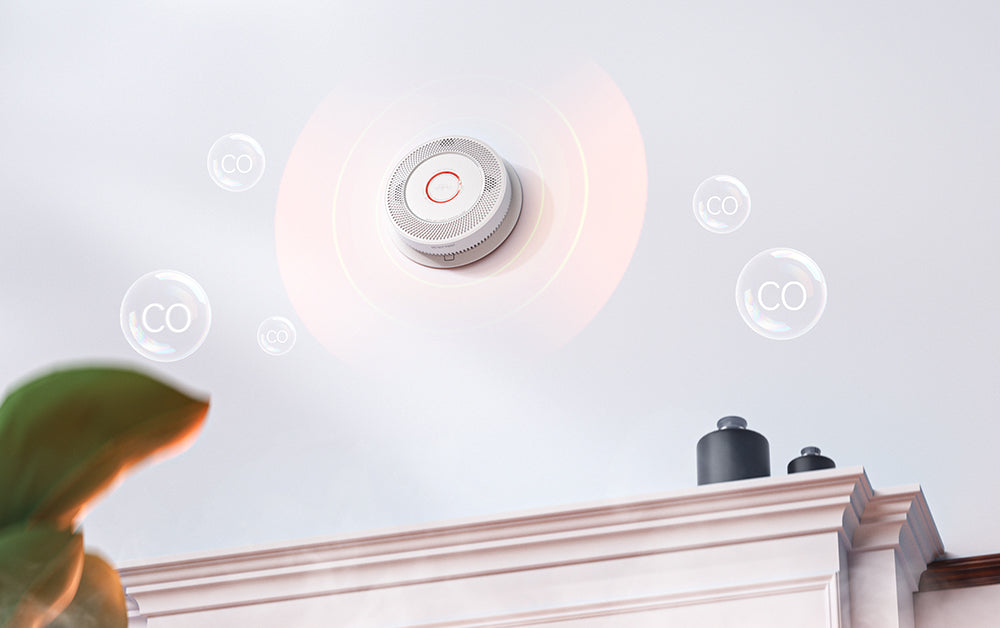
Carbon monoxide is colorless, odorless, and has no taste. It does not irritate the throat or sting the eyes the way smoke does. Victims often describe the onset as feeling drowsy, then confused — and by the time that confusion sets in, they may lack the motor control to leave the space or call for help. This is why CO poisoning claimed more American lives annually than residential fires involving smoke and flames for much of the past decade, according to the U.S. Fire Administration.
The Placement Error That Neutralizes a Good CO Alarm
Here is where the generator owner who "did everything right" still ends up in the ER: CO alarms protect the space they are in, not the space they are near. A battery-operated smoke alarm or combination smoke and CO alarm mounted in a second-floor bedroom does an excellent job protecting a sleeping family from CO that has migrated upward through the house — but it does almost nothing if CO is flooding the garage and first-floor hallway before it can diffuse far enough to reach the detector's sensor.
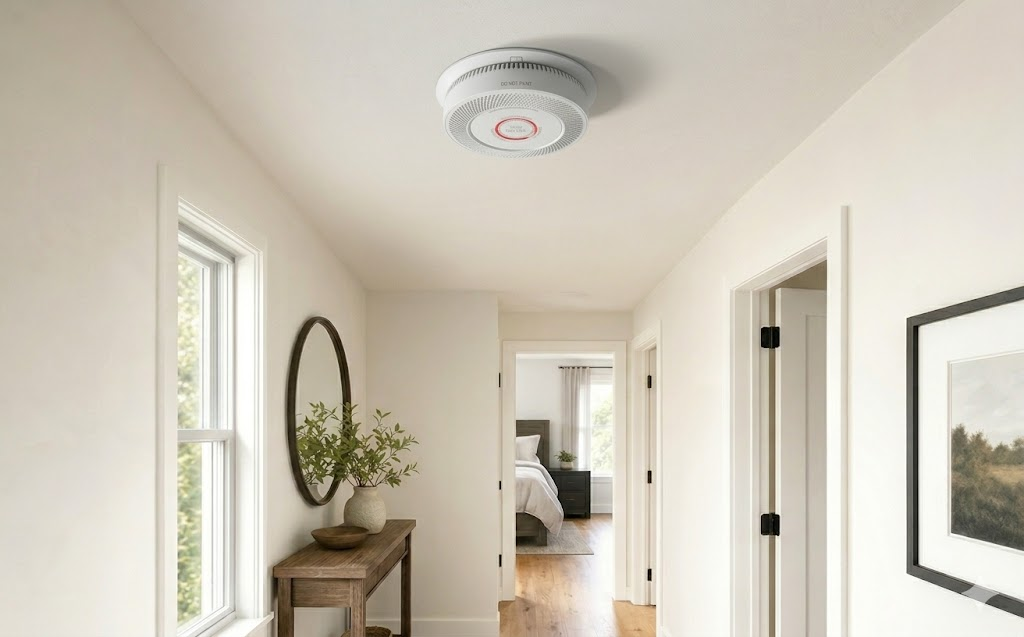
NFPA 72, the National Fire Alarm and Signaling Code, provides the governing standard for CO alarm placement. The requirement is clear: every level of a home must have at least one CO alarm, and the alarm should be installed within ten feet of each sleeping area. For homes where a generator may be operating adjacent to the structure — in a garage, on a back patio within twenty feet of a window, or on a covered porch — an additional alarm near the potential entry point becomes critical.
The 20-foot rule that CPSC recommends for generator placement — keep the machine at least 20 feet from any door, window, or vent — exists because CO concentrations drop sharply with distance outdoors. But that rule assumes still air and an unobstructed outdoor path. In practice, a generator positioned "outside" in a breezeway, a carport connected to the house, or an inward-blowing AC intake zone can still funnel dangerous concentrations indoors.
Battery-Operated CO Alarms Are Not Optional During a Power Outage — They Are the Point
This is a detail that catches even safety-conscious homeowners off guard. Hardwired smoke detectors and hardwired CO alarms are common in modern construction, and they provide excellent protection under normal conditions. But a hardwired detector without a battery backup goes dark during a power outage — the exact moment a portable generator is most likely to be running. The protective gap is nearly total.
A battery-operated smoke alarm or battery-operated carbon monoxide alarm continues functioning regardless of whether grid power is available. For generator season specifically, having at least one battery-operated CO alarm stationed near the garage entry point or basement access — wherever the generator exhaust path is shortest — is not a redundancy. It is the primary line of defense. Homeowners who rely exclusively on hardwired detectors should treat the start of storm season as an annual prompt to add at least one battery-operated CO alarm near the most probable generator exhaust entry point.
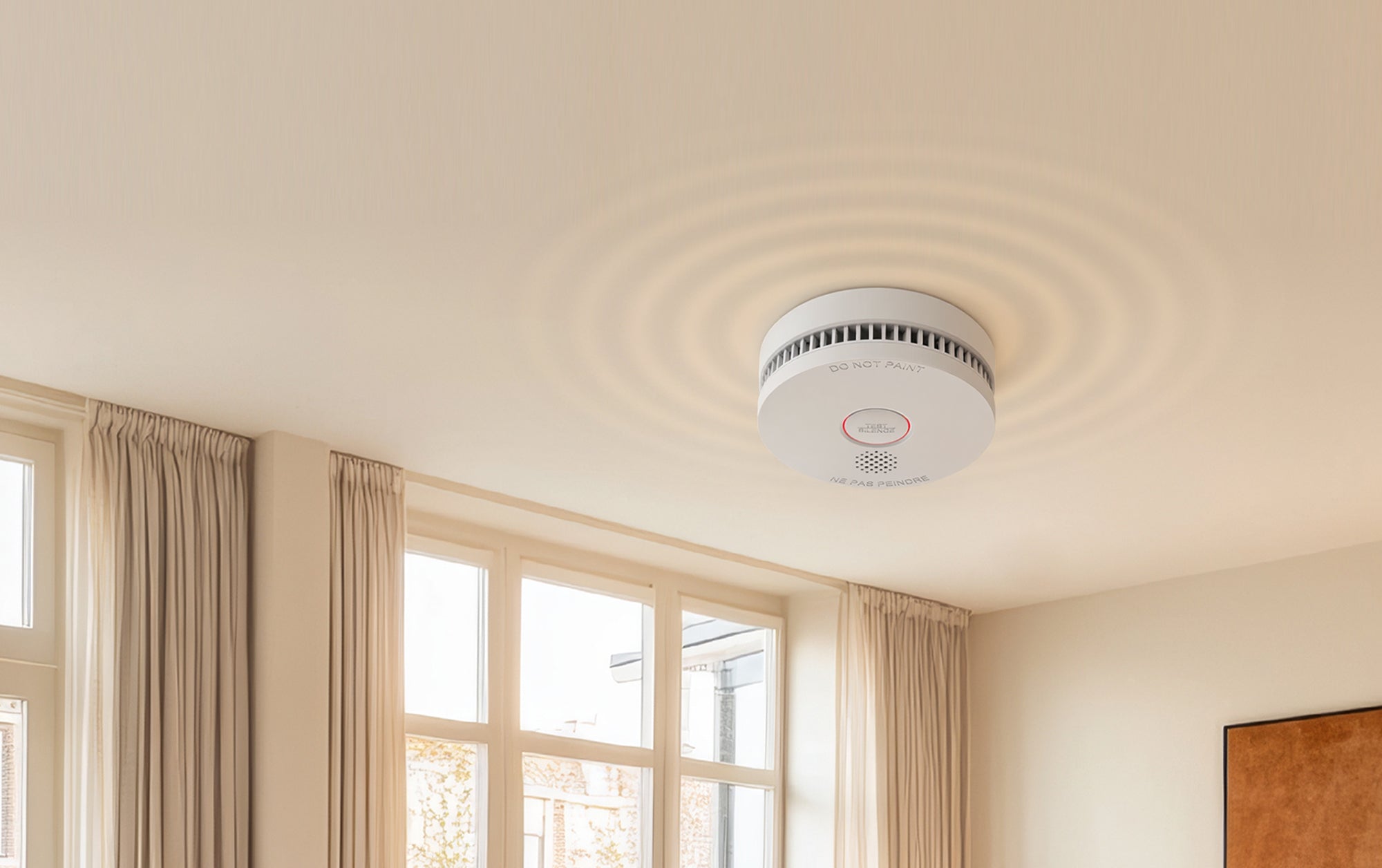
For households that want a single device to handle both threats, a combination smoke and CO alarm running on a sealed 10-year battery offers an additional advantage: no annual battery swaps, no dead battery on night three of a power outage because someone forgot to replace the AA cells in the spring. The sealed 10-year battery alarm format has been growing across state mandates — California, Oregon, and a handful of other states now require them by code in new construction — but they are a sound investment in any home regardless of local regulation.
Interconnected Alarms and Why Multi-Story Homes Need a Network, Not a Single Detector
A single CO alarm, however well-placed, only wakes the people within earshot of its 85-decibel alarm. In a two-story home with the generator running in the first-floor garage and the family sleeping on the second floor with doors closed — doors that, incidentally, slow CO migration but do not stop it — the alarm on the kitchen counter may go off several minutes before anyone upstairs can hear it.
Interconnected smoke alarms address this by triggering every alarm in the network the moment any single unit detects a threat. Radiofrequency-linked or hardwired interconnected smoke alarms have been required in new residential construction under most state codes for years, but millions of older homes were built before that requirement existed. In those homes, adding wireless-interconnected combination smoke and CO alarms can mean the difference between a first-floor alert that wakes the household and a first-floor alert that nobody hears until the situation is critical.
For families with elderly members, young children, or anyone who sleeps with a white-noise machine or hearing aids removed — all of whom are statistically at higher risk of failing to respond to a single detector — interconnected alarms are not a nice-to-have. The National Fire Protection Association has documented repeatedly that working interconnected smoke alarms and CO alarms are among the highest-impact interventions in residential fire and CO safety.
A Generator-Season Carbon Monoxide Safety Checklist
Before the next power outage occurs, not after it:
- Test every CO alarm and combination smoke and CO alarm in the home. Press the test button and confirm the alarm sounds. If the unit is more than 7 years old (CO sensor lifespan is typically 5–10 years), replace it regardless of whether it appears to pass the test — the electrochemical sensor degrades over time.
- Confirm at least one battery-operated CO alarm is installed near the garage entry or the floor-level point closest to where the generator will run.
- Check hardwired CO alarms for battery backup. If the backup battery slot is empty, add a battery now.
- Review generator placement: 20 feet minimum from any door, window, or vent. Factor in wind direction — exhaust blowing toward the house is dangerous even at 25 feet.
- Never run a generator in a garage, carport, basement, or crawl space, even with doors open. Open doors help; they do not neutralize the risk.
- If any alarm sounds during generator use: evacuate immediately, leave doors open as you exit, call 911 from outside. Do not re-enter until emergency responders clear the space.
The Alarm That Was There But Could Not Help
The family in the Florida scenario at the start of this article survived. Their story, reconstructed from a CPSC incident investigation summary, is one of hundreds catalogued over the past decade. The kitchen CO alarm did eventually trigger — after CO concentrations in the living space reached a level that had already incapacitated one family member sitting closest to the garage door hallway. A second alarm near the garage entry, on the first floor, would likely have triggered ten to fifteen minutes earlier, when the family was still fully functional and capable of evacuating calmly.
Generator season runs from roughly June through November across most of the United States, overlapping with hurricane season, peak wildfire power-shutoff events on the West Coast, and summer thunderstorm patterns across the Midwest. That is five months of elevated CO risk in millions of homes, concentrated precisely in the window when power grid reliability is lowest and generator use is highest. The equipment to protect against it is inexpensive, long-lasting, and widely available. The only thing required is making the right placement decisions before the lights go out — because afterward, in the dark, with a generator running, is exactly the wrong time to be reading the alarm manual.