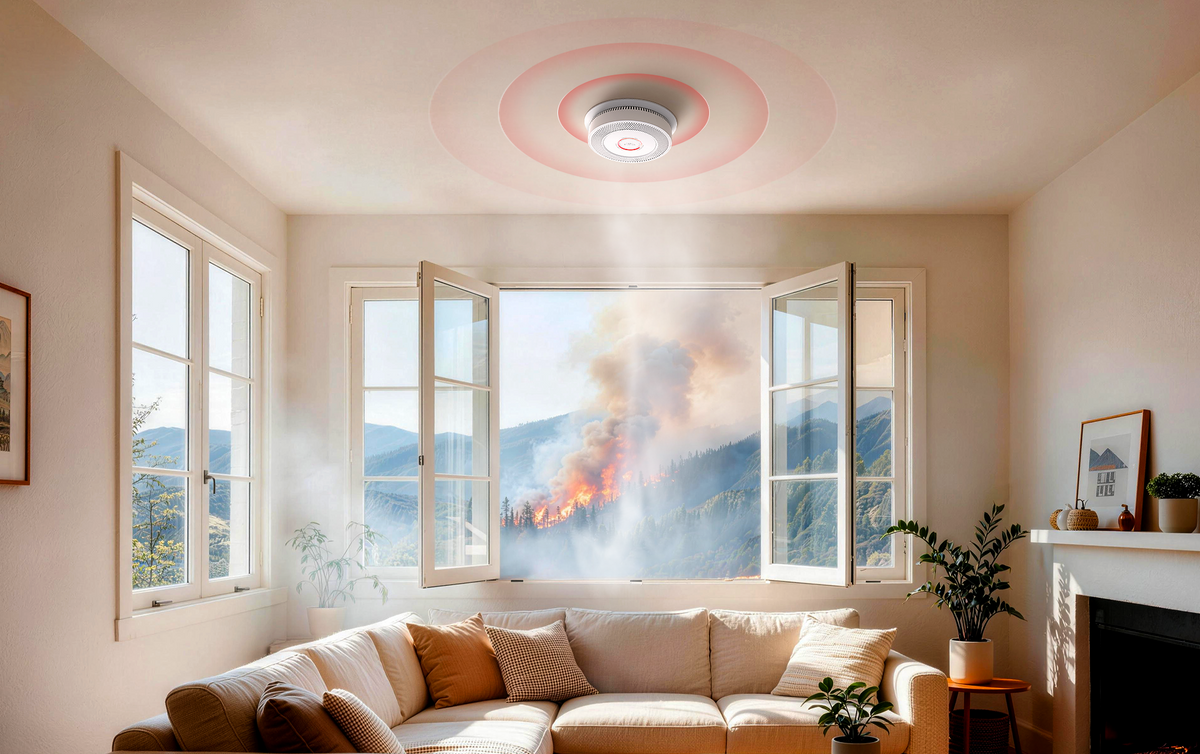
You wake up to a smoky smell. Outside, the sky looks hazy, but your smoke alarm is quiet.
So, does that mean the air inside your home is fine?
Not necessarily.
Wildfire smoke can enter a home through open windows and doors, ventilation systems, small gaps, and other openings. Once inside, it can affect indoor air quality. A smoke alarm may respond if enough smoke reaches its sensor, but that's not what a smoke alarm is designed to measure.
Understanding the difference can help you know what your alarms can tell you—and what they can't.
Can Wildfire Smoke Trigger a Smoke Alarm?
Yes. Wildfire smoke contains airborne particles produced by combustion. If enough smoke reaches a smoke alarm's sensor, it may trigger the alarm.
That doesn't mean every smoky day will set off a smoke alarm. The response can vary depending on how much smoke enters the home, the indoor particle concentration, the type of alarm, and where the alarm is installed.
The key point is simple: a smoke alarm can detect smoke, but it is not a wildfire smoke monitor.
A quiet smoke alarm doesn't necessarily mean there is no wildfire smoke indoors.

What Does a Smoke Alarm Actually Detect?
Smoke alarms are designed to provide an early warning when smoke from a fire is detected. They are not designed to measure how much wildfire smoke is in the air or whether indoor air quality is healthy.
Other tools serve different purposes.
A CO alarm detects carbon monoxide, a colorless and odorless gas that a smoke alarm cannot detect.
An air-quality monitor can measure pollutants such as fine particulate matter, including PM2.5.
And when wildfire smoke is affecting your area, the AirNow Fire and Smoke Map can help you check outdoor air quality, smoke conditions, and nearby fire activity.
During a wildfire smoke event, you may need to rely on more than one of these tools because they answer different questions.
Is Wildfire Smoke Affecting the Air Inside Your Home?
A smoke alarm can't give you an indoor air-quality reading.
Even when a smoke alarm isn't sounding, fine particles from wildfire smoke can still enter your home and affect indoor air quality. EPA recommends checking local air-quality information and taking steps to reduce smoke exposure when conditions are poor.
Smoke can enter through:
- Open windows and exterior doors
- HVAC systems with outdoor-air intakes
- Exhaust fans and other ventilation
- Small gaps and openings around windows, doors, and other parts of the home
How much smoke gets inside depends on conditions outside, the home's construction, ventilation, and other factors.

What to Do When Wildfire Smoke Gets Inside
If wildfire smoke is affecting your area, there are a few practical steps you can take to reduce your exposure.
1. Keep windows and doors closed
When outdoor smoke levels are high, keep windows and exterior doors closed as much as possible. If smoke is entering through obvious gaps, check whether they can be sealed safely.
2. Use your HVAC system wisely
If your HVAC system has a recirculation setting, use it during smoky conditions. If your system has a fresh-air intake, follow the manufacturer's guidance for operating it during a smoke event.
If your system can accommodate a higher-efficiency filter, EPA recommends using an appropriate filter and replacing it as needed.
3. Consider a portable air cleaner
A portable air cleaner can help reduce fine particles indoors, particularly in the room where you spend the most time. EPA also recommends creating a cleaner-air room when wildfire smoke is affecting your home.
4. Check local air-quality information
Don't rely on your smoke alarm to tell you how smoky it is outside.
The AirNow Fire and Smoke Map provides information on PM2.5, smoke plumes, fire locations, and current conditions.
5. Follow evacuation orders
If local officials issue an evacuation order, leave as instructed.
A smoke alarm is part of your home's fire-safety system. It is not a substitute for emergency alerts or evacuation instructions.
What About Carbon Monoxide?
Wildfire smoke and carbon monoxide are two different hazards, but they can become a concern during the same emergency.
Power outages, for example, may lead people to use portable generators or other fuel-burning equipment. Improper use can cause carbon monoxide to build up quickly.
CPSC recommends installing CO alarms on every level of the home and outside sleeping areas. Portable generators should never be used inside a home, garage, basement, or other enclosed space.
A smoke alarm cannot detect carbon monoxide, which is why smoke and CO alarms serve different roles in a home's safety system.

Know What Your Alarms Can—and Can't—Do
Wildfire smoke can affect your home in ways that a smoke alarm alone can't measure.
Knowing what each tool is designed to do makes it easier to respond when conditions change.
For more information about wildfire smoke and indoor air quality, visit the EPA's wildfire smoke resources and AirNow's Fire and Smoke Map.