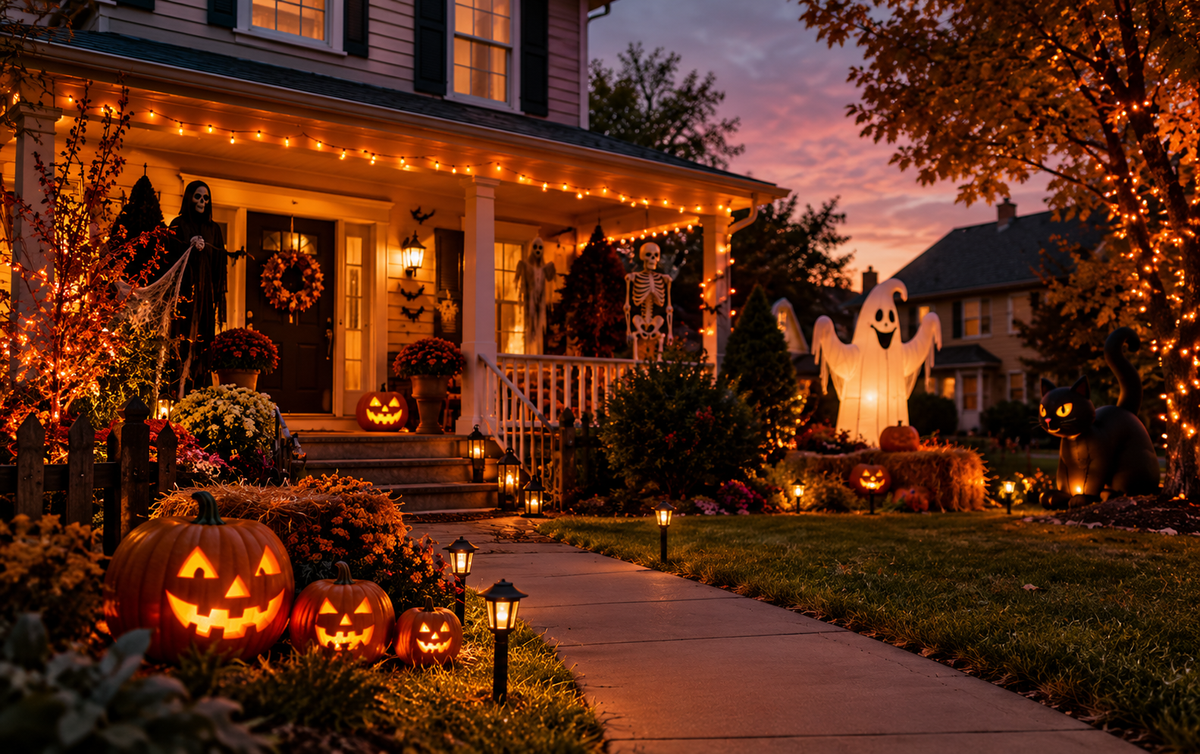
Halloween decorating has come a long way from a few pumpkins on the porch and a string of orange lights.
These days, some neighborhoods go all out with towering skeletons, giant inflatables, fog machines, laser projectors, and light shows that turn an ordinary front yard into a full-blown haunted attraction. Smart plugs and timers make it easier than ever to bring the whole display to life.
It's all part of the fun. But when you're plugging in multiple decorations and leaving them running for hours, it's worth taking a few minutes to check your setup.
Damaged cords, overloaded circuits, and outdoor connections exposed to moisture can turn a festive display into a fire or shock hazard. This is why Halloween electrical safety matters when you use outdoor lights, inflatables, fog machines, projectors, or smart timers. Here's what to check before the trick-or-treaters arrive.
1. Check Your Power Before Plugging Everything In
One inflatable might not draw much power on its own. But add a fog machine, several light strands, a projector, and a few animated props, and the total load can add up.
Before plugging everything in, check the wattage listed on each decoration or in its manual. For a quick estimate on a typical 120-volt household circuit, divide watts by volts to calculate amps.
Watts ÷ 120 volts = amps
For example, a 600-watt device draws about 5 amps at 120 volts.
The important thing is to consider everything running on the same circuit—not just the decoration you're plugging in last. Check the circuit rating and each product's instructions, and avoid overloading outlets or extension cords. Do not connect one extension cord or power strip to another, and do not exceed the number of light strands or devices allowed by the manufacturer. If you're unsure whether your setup can handle the load, ask a qualified electrician.
Using smart plugs or timers?
They're handy for automating your Halloween light show, but not every smart plug is designed for outdoor use or high-power equipment.
Choose a device rated for outdoor conditions and the specific type of load you're connecting. Check its maximum current or wattage rating, and follow the manufacturer's instructions. A smart plug isn't a substitute for proper circuit protection.

2. Keep Outdoor Plugs and Cords Protected
Fall weather can be unpredictable. Rain, overnight dew, sprinklers, and wet grass can all expose outdoor electrical connections to moisture.
Before setting up your display, inspect every extension cord and decoration for cracked insulation, frayed wires, damaged plugs, or loose connections. Replace damaged items rather than trying to patch them up.
A few other things to keep in mind:
- Use outdoor-rated equipment. Extension cords and decorations should be marked for outdoor use and suitable for the electrical load.
- Use GFCI protection. Plug outdoor electrical decorations into ground-fault circuit interrupter (GFCI)-protected outlets. Test the protection according to the manufacturer's instructions before use. For more detail, see the NFPA electrical safety guidance for Halloween.
- Keep connections away from standing water. Use appropriate outdoor-rated covers or connection enclosures where needed, and follow their instructions for protecting plugs from moisture.
- Avoid pinched or buried cords. Don't run cords through doorways or windows where they can be crushed, or hide them under rugs where damage may go unnoticed.
And here's a simple rule: If a cord feels unusually hot, stop using it. Unplug it if you can do so safely, and check for an overloaded circuit, an unsuitable cord, or damaged equipment before using anything again.
Turn off and unplug outdoor decorations before going to bed or leaving home. If rain, strong wind, flooding, or another unsafe condition develops, switch off the display and disconnect it only if you can do so safely.
3. Give Inflatables and Fog Machines Room to Operate
A giant skeleton or a fog-filled front yard might be the centerpiece of your display, but these decorations need a little attention beyond plugging them in.
For inflatables: Make sure the blower's air intake stays clear of leaves, grass, plastic bags, and other debris. Secure the decoration with the stakes, tethers, or anchors provided by the manufacturer. Wind can shift even a large inflatable, so position it away from electrical equipment, lights, and areas where people walk.
For fog machines: Follow the manufacturer's instructions for placement, operation, and fluid selection. Keep the machine and its hot components away from dry leaves, mulch, straw, and other combustible materials. Don't cover the machine or block its ventilation, and never leave it operating unattended unless the manufacturer specifically permits it. Make sure fog does not hide steps, cords, or other trip hazards, and keep the machine away from smoke alarms unless the manufacturer or a qualified professional provides specific guidance.
For lights and animated props: Keep decorations clear of anything that could overheat or catch fire. Use products approved for their intended purpose, and check their placement again after strong winds or bad weather.
A quick walkthrough after everything is running can help you spot a loose cord, a blocked air intake, or a decoration that's shifted into a walkway.

4. Keep Walkways and Exits Clear
Halloween night can get busy fast. Between excited kids, parents carrying candy bags, and neighbors stopping to admire your setup, your front yard needs to be easy to navigate.
Route cords along the edges of walkways rather than across them. Avoid crossing a walking area whenever possible. If a cord must cross a walking area, use a suitable cord protector designed for that location.
Also, make sure your decorations don't block:
- Front doors, steps, or other exits.
- Driveways and paths used by family members or visitors.
- Access to electrical panels, gas meters, and other utility equipment.
- Nearby fire hydrants or emergency access points.
Check your outdoor lighting, too. A well-lit path helps visitors spot steps, uneven pavement, cords, and other obstacles before they trip.
The goal is to create a display people can enjoy without having to navigate an obstacle course to reach your front door.

5. Don't Forget Your Home's Fire Safety System
Once the yard is ready, take a moment to check the safety measures inside your home, too.
Even a carefully planned Halloween display involves electrical equipment, and a fault can create a fire risk. Working smoke alarms help provide an early warning if smoke from a fire reaches a protected area of your home.
The U.S. Fire Administration's smoke alarm guidance recommends installing smoke alarms inside every bedroom, outside each separate sleeping area, and on every level of the home. It also recommends interconnected smoke alarms, so when one sounds, the others sound as well. This can help alert people throughout the house, including those who may be farther from the source of a fire.
A few reminders before Halloween night:
- Test your smoke alarms. Make sure they're working and follow the manufacturer's maintenance instructions. If you need a step-by-step check, see our guide to testing smoke alarms.
- Check alarm placement. Keep alarms installed in the locations recommended by fire safety guidance and the product manufacturer. See our guide to where to place smoke alarms for a room-by-room review.
- Consider interconnected alarms. When one detects smoke, interconnected alarms can sound throughout the home, giving family members another opportunity to hear the warning.
Smoke alarms and carbon monoxide (CO) alarms serve different purposes. Smoke alarms detect smoke from a fire; CO alarms detect carbon monoxide. Neither replaces the other, and CO alarms should be installed according to the manufacturer's instructions and applicable local requirements. For placement guidance, see where to place a carbon monoxide detector.
For families with an attached garage, follow local fire guidance and the manufacturer's instructions for smoke and CO alarm placement. Do not assume that a standard smoke alarm belongs inside a garage; vehicle exhaust, dust, temperature changes, and humidity may affect alarm performance.
Enjoy the Halloween Show—With Safety in the Picture
The best Halloween displays are the ones that bring the neighborhood together, whether you're putting out a few glowing pumpkins or building an elaborate haunted yard.
Before switching on the lights, take a few minutes to check your electrical load, inspect your cords, protect outdoor connections, and make sure walkways are clear. Then test your home's smoke alarms, review your family fire escape plan, and confirm that everyone knows how to get out safely if an emergency occurs.
A little preparation can go a long way toward making sure the scariest thing about your Halloween display is the decorations themselves.