

Choosing a smoke alarm isn't just about finding one that makes noise when smoke is detected. The right choice depends on your home's layout, power source, detection technology, and the features that help keep your household protected.
With options ranging from battery-powered and hardwired models to photoelectric and interconnected alarms, it can be difficult to know where to start. Understanding the differences can help you choose a smoke alarm that fits your home and provides reliable early warning when it matters.
Here's what to consider before buying.
1. Battery-Powered vs. Hardwired Smoke Alarms: What's the Difference?
One of the first things to consider is how your smoke alarm will receive power. Most residential smoke alarms are either battery-powered or hardwired into your home's electrical system.
Neither option is automatically right for every home. Your existing wiring, installation requirements, and local building codes all play a role.
Battery-Powered Smoke Alarms
Battery-powered smoke alarms run on batteries rather than your home's electrical wiring. They're generally easier to install and can be a practical option for existing homes, additions, or locations where hardwiring isn't available.
Depending on the model, they may use replaceable batteries or a sealed, long-life battery designed to last up to 10 years.
What to consider:
- Flexible installation without connecting to household wiring.
- Suitable for many existing homes and retrofit applications, where permitted by local codes.
- Replaceable-battery models require periodic battery changes.
- Sealed 10-year battery models reduce the need for routine battery replacement.
Hardwired Smoke Alarms
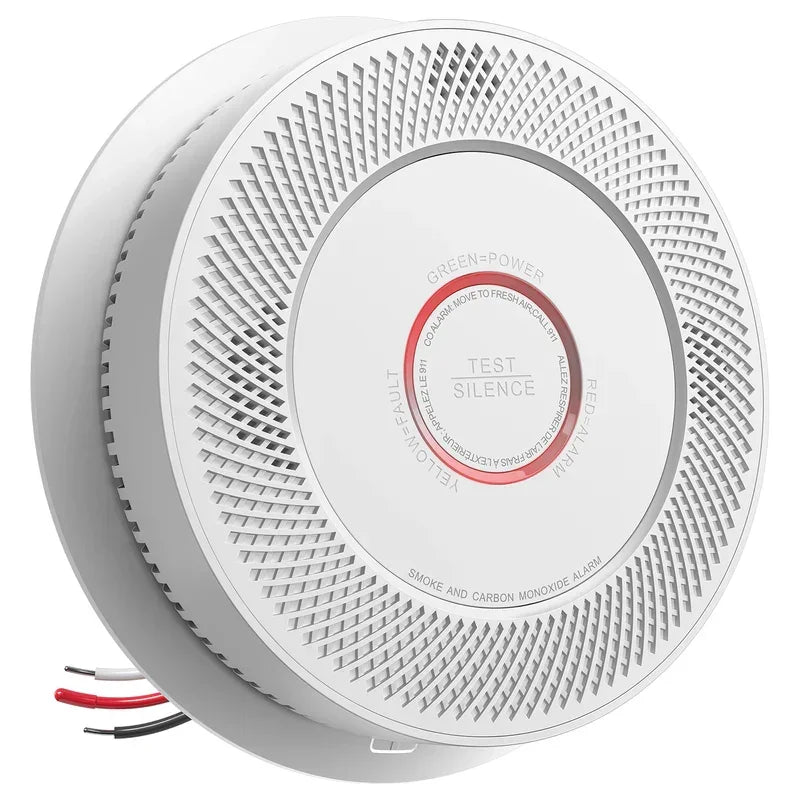
Hardwired smoke alarms connect directly to your home's electrical system. Many models also include a backup battery to help keep the alarm operating during a power outage.
They're commonly found in newer homes and properties with existing hardwired alarm systems. Some installations also support interconnection, allowing multiple alarms to communicate with one another.
What to consider:
- Powered by your home's electrical system.
- Typically includes a backup battery.
- May be required by local building codes for certain homes or renovations.
- Installation or replacement should be handled by a qualified electrician.
Which One Should You Choose?
If you're replacing an existing alarm, start by checking how it's currently powered and whether your local code requires a particular setup.
For homes without existing alarm wiring, a battery-powered model may offer a simpler installation option. For homes with an established hardwired system, a compatible hardwired replacement may make more sense.
Always check local requirements and the manufacturer's installation instructions before making a decision.

2. Photoelectric vs. Ionization Smoke Alarms: Which Technology Is Right for You?
Smoke alarms use different sensing technologies to detect smoke. The two most common types are photoelectric and ionization.
Both are designed to detect smoke, but they respond differently depending on the type of fire.
Photoelectric Smoke Alarms
Photoelectric alarms use a light source and a light-sensitive sensor inside a detection chamber. When smoke enters the chamber and scatters the light toward the sensor, the alarm activates.
They're generally more responsive to smoldering fires, which can produce significant amounts of smoke before flames develop.
Key characteristics:
- Generally respond faster to smoldering fires.
- Use optical sensing technology.
- Are commonly selected for residential applications.
- Can be a good option where reducing nuisance alarms is an important consideration, when properly installed.
Ionization Smoke Alarms
Ionization alarms use a small amount of radioactive material inside a sensing chamber to create an electrical current. When smoke enters the chamber, it disrupts that current and triggers the alarm.
They're generally more responsive to flaming fires, which can develop and spread quickly.
Key characteristics:
- Generally respond faster to flaming fires.
- Use ionization-based sensing technology.
- Detect smoke through changes in electrical current.
So, Which Detection Technology Is Better?
There isn't one technology that's best for every fire scenario.
According to the U.S. Fire Administration (USFA), ionization alarms tend to respond faster to flaming fires, while photoelectric alarms tend to respond faster to smoldering fires. Since it's impossible to predict what type of fire might occur in a home, the USFA recommends having both types of alarms or choosing dual-sensor smoke alarms that combine both technologies.
The most important takeaway is to choose a properly listed smoke alarm, make sure your home has adequate coverage, and follow the recommended installation guidelines.

3. Standard vs. 10-Year Sealed Battery Smoke Alarms
Battery maintenance is another important factor when choosing a smoke alarm.
Traditional battery-powered alarms typically use replaceable batteries, while newer models may feature a sealed, long-life battery designed to power the alarm for up to 10 years.
Standard Replaceable-Battery Smoke Alarms
These alarms use batteries that can be removed and replaced when needed.
Advantages:
- Batteries can be replaced without changing the entire alarm.
- Replacement batteries are generally easy to find.
- A practical option for homeowners who are comfortable with regular maintenance.
Things to keep in mind:
- Batteries need to be checked and replaced according to the manufacturer's instructions.
- A low or missing battery can leave the alarm unable to operate.
- The entire alarm still needs to be replaced when it reaches the end of its service life.
10-Year Sealed Battery Smoke Alarms
These models feature a built-in battery designed to last for the alarm's intended 10-year service life.
Once activated, the battery is not designed for routine replacement. Instead, the entire smoke alarm is replaced when it reaches the end of its service life.
Advantages:
- Less routine battery maintenance.
- No need for regular battery purchases.
- Helps reduce the chance of forgetting scheduled battery changes.
Things to keep in mind:
- The battery is not designed to be replaced separately.
- The alarm still needs to be tested regularly.
- The entire unit must be replaced according to its service-life instructions.
Is a 10-Year Sealed Battery Model Worth Considering?
For homeowners looking for a lower-maintenance option, a 10-year sealed battery smoke alarm can be a convenient choice.
However, it's important to understand that a 10-year battery does not mean the alarm can be used indefinitely. The alarm itself has a limited service life.
The USFA recommends replacing smoke alarms 10 years from their manufacture date. Always check the manufacturing date and follow the product's replacement instructions.

4. Standalone vs. Interconnected Smoke Alarms
The number and placement of smoke alarms matter, but so does how they communicate throughout your home.
A standalone alarm operates independently, while interconnected alarms are designed to communicate with other compatible alarms in the system.
Standalone Smoke Alarms
A standalone smoke alarm detects smoke and sounds its own built-in alarm.
Advantages:
- Simple setup.
- No need to connect multiple alarms.
- Can be suitable for individual locations where standalone alarms are permitted.
Limitations:
- An alarm sounding in one room may not activate other standalone alarms elsewhere in the home.
- Sound may be harder to hear from another floor or a distant room, especially when bedroom doors are closed.
Interconnected Smoke Alarms
Interconnected smoke alarms communicate with one another so that when one alarm detects smoke, all compatible connected alarms can sound.
Depending on the system, interconnection may use hardwired connections or wireless technology.
Advantages:
- Helps alert people throughout the home when smoke is detected in one area.
- Particularly useful for larger or multi-story homes.
- Provides an additional layer of early warning in bedrooms and other distant areas.
Which Setup Makes More Sense?
For homes with multiple floors, separate sleeping areas, or larger layouts, interconnected smoke alarms are worth considering.
The USFA recommends interconnected alarms so that when one sounds, they all sound.
Before purchasing, check whether the alarms are designed to work together. Not all models are compatible, and wireless interconnection does not necessarily mean Wi-Fi or smartphone connectivity.

5. Important Features to Consider Before Buying a Smoke Alarm
Beyond the basic differences, a few additional features can make a meaningful difference in everyday use.
Here are some details worth checking before making a purchase.
I. Third-Party Safety Certification
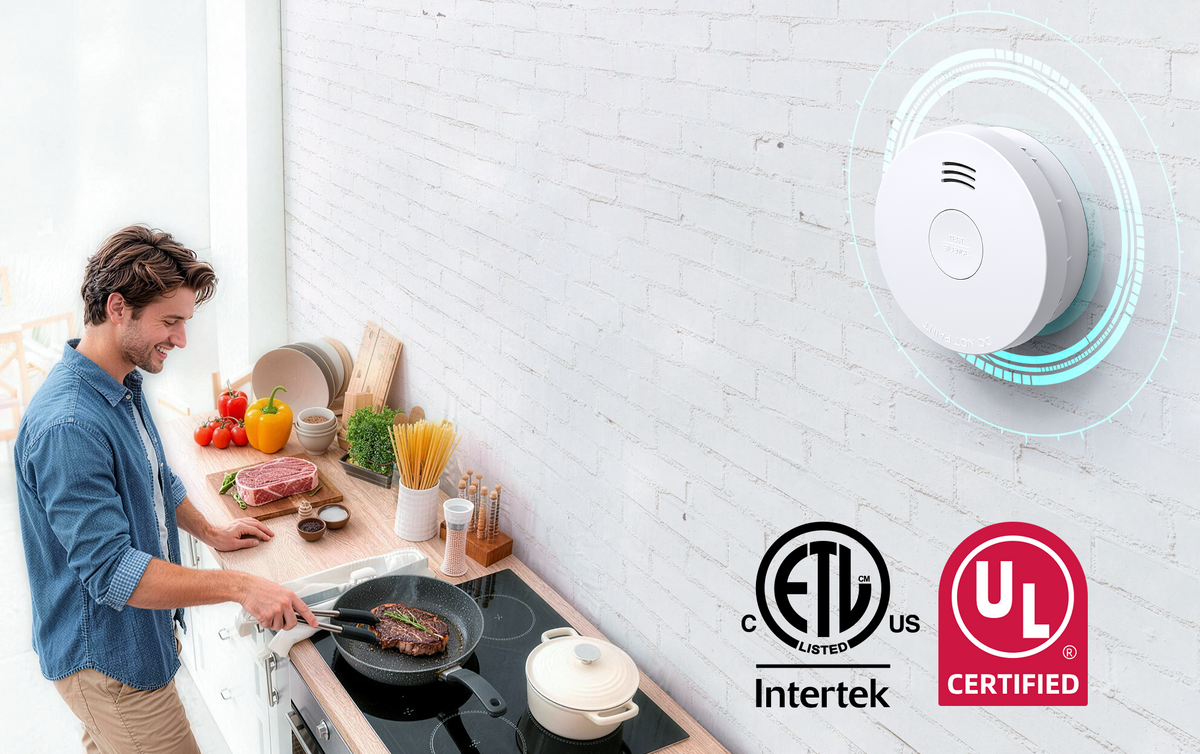
In the United States, UL and ETL are two certification marks consumers may encounter on electrical and safety products.
Check the specific model's certification information and applicable standard rather than relying on a logo or general marketing claim alone.
II. Test and Silence Functions
A test button allows you to check whether the alarm's electronic and audible alert functions are working as intended.
A hush or silence function can temporarily silence certain nuisance alarms, such as those triggered by cooking smoke, when it's safe to do so.
These features can make routine maintenance and everyday use more convenient.
Remember: Never remove the battery or disable an alarm to prevent nuisance alerts.
III. Low-Battery and End-of-Life Warnings
Smoke alarms should provide clear indications when maintenance or replacement is needed.
Depending on the model, these may include:
- Low-battery warnings.
- End-of-life signals.
- Fault or malfunction indicators.
Understanding these signals helps you know when to replace a battery, inspect the device, or replace the entire alarm.
IV. Reliable Audible Alerts
An alarm needs to be loud enough to alert people throughout the intended coverage area.
Check the manufacturer's specified sound output and make sure alarms are installed in the locations recommended for your home.
For households with people who are deaf or hard of hearing, consider compatible supplementary alerting devices, such as visual strobes or bed shakers.
V. Easy Maintenance and Installation
A well-designed smoke alarm should be straightforward to install, test, and maintain.
Consider features such as:
- Clear installation instructions.
- Convenient testing access.
- Secure mounting hardware.
- Long-life battery options.
- A design that makes routine maintenance easier.
The best choice is one that fits your home and that you can keep properly installed and maintained.

6. Where Should You Install Smoke Alarms in Your Home?
Even a quality smoke alarm cannot provide the intended protection if it's installed in the wrong location or if your home doesn't have enough coverage.
The USFA recommends installing smoke alarms:
- Inside every bedroom.
- Outside each separate sleeping area.
- On every level of the home, including the basement.
Additional considerations:
- Install alarms on the ceiling or high on a wall, following the manufacturer's instructions.
- Avoid locations where cooking smoke or steam may cause frequent nuisance alarms.
- Keep alarms away from drafts that may interfere with their operation.
- Follow local building and fire safety codes.
For larger homes, additional alarms may be needed to provide appropriate coverage.
7. A Simple Smoke Alarm Buying Checklist
Still unsure which smoke alarm to choose? Use this checklist to compare your options before buying.
| What to Check | Questions to Ask |
|---|---|
| Power Source | Do I need a battery-powered or hardwired model? |
| Detection Technology | Is it photoelectric, ionization, or dual-sensor? |
| Battery Design | Does it use replaceable batteries or a sealed 10-year battery? |
| Interconnection | Does my home need interconnected alarms? |
| Certification | Is the specific model listed to the applicable safety standard? |
| Essential Features | Does it have test, hush, and appropriate warning functions? |
| Product Lifespan | When should the entire alarm be replaced? |
| Installation | Does it meet my home's layout and local requirements? |
Taking a few minutes to compare these details can help you avoid choosing an alarm based on price or appearance alone.
8. Keep Your Home Prepared With the Right Smoke Alarm
Choosing the right smoke alarm is an important part of creating a safer home. Whether you prefer a battery-powered model, a hardwired system, or a low-maintenance 10-year sealed battery option, the key is finding a solution that meets your home's needs.
Remember to install smoke alarms in the recommended locations, test them at least once a month, and replace them when they reach the end of their service life.
At Siterwell, we believe home safety should be both reliable and easy to maintain. Explore our smoke alarm collection to learn more about different detection technologies, power options, and features designed for everyday home protection.