


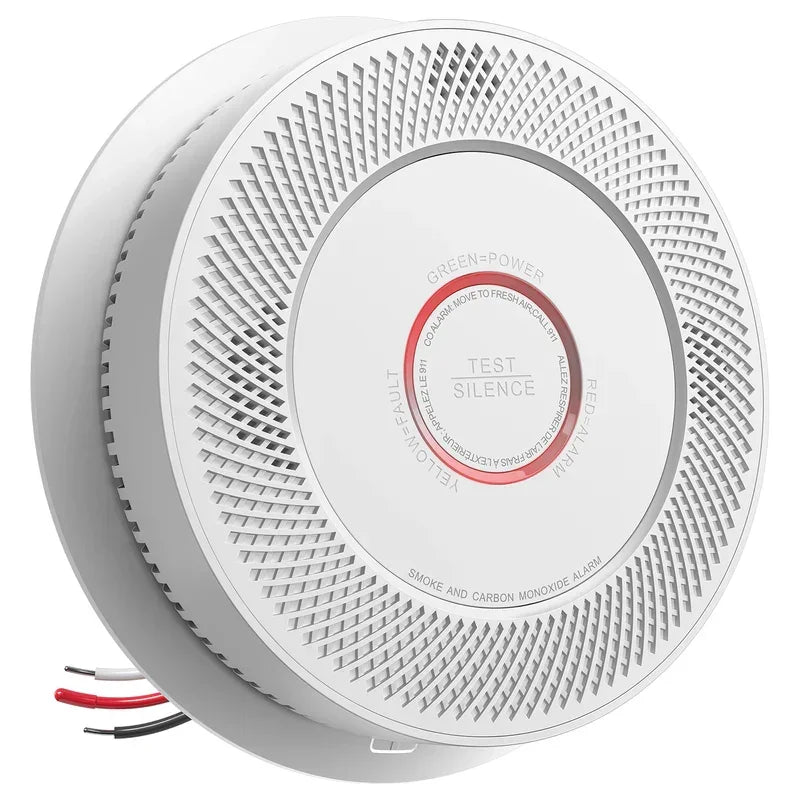


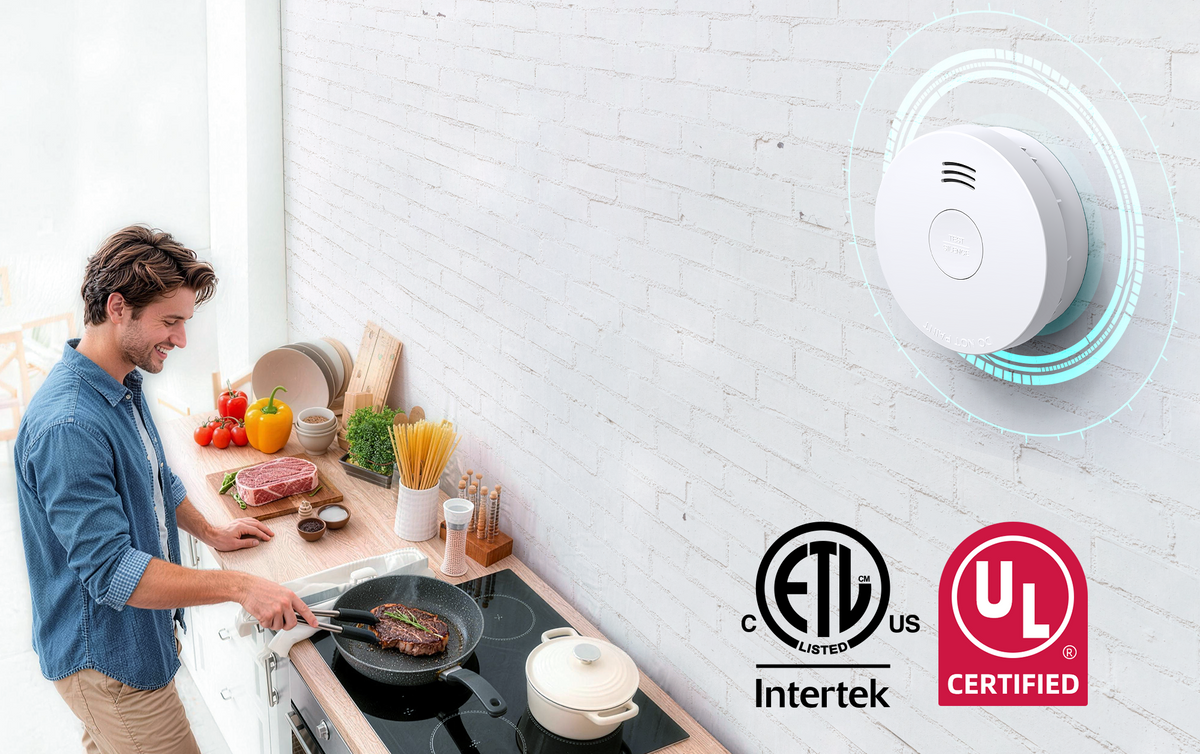
When shopping for a smoke alarm, it's easy to compare prices, battery life, and features. But there's one detail you shouldn't overlook: product certification.
You may have noticed a UL or ETL mark on the back of a smoke alarm or its packaging. These aren't just logos. They indicate that a product has been independently evaluated against applicable safety standards.
One of the key standards for residential smoke alarms in North America is UL 217. But what does it actually cover? Is a UL Listed alarm different from an ETL Listed one? And how can you check whether a smoke alarm is properly certified?
Let's take a closer look—and see what these certifications mean for the Siterwell GS525A Smoke Alarm.
01. Why Does Smoke Alarm Certification Matter?
A smoke alarm is one of those devices you hope you'll never need. But if a fire breaks out, you need it to work as intended.
That's why certification matters.
A smoke alarm isn't simply a device that makes noise when it detects smoke. It needs to meet specific requirements for safety and performance, including how it responds to different fire conditions and how reliably it operates.
Third-party certification provides an independent way to verify that a product has been evaluated against the applicable requirements.
When choosing a smoke alarm, look for:
- A recognized certification mark: Such as UL or ETL, indicating independent product evaluation and certification.
- The applicable safety standard: Check whether the product is certified to UL 217 or another applicable standard.
- Clear product information: Look for the model number, manufacturing or replacement date, and installation instructions.
A familiar brand name or an impressive feature list isn't a substitute for checking a product's certification.
02. What Is UL 217?
UL 217 is the Standard for Smoke Alarms. It establishes safety and performance requirements for residential smoke alarms, including tests designed to evaluate how they respond to different fire conditions.
The standard has evolved over time as fire research and home environments have changed. Newer editions introduced additional testing requirements to address the types of fires and nuisance alarm conditions that can occur in modern homes.
Some important areas covered by UL 217 include:
Fire detection performance
Smoke alarms are evaluated under different fire scenarios, including smoldering and flaming fires. These tests help assess whether an alarm can respond appropriately to different types of smoke.
Cooking nuisance alarm resistance
Cooking smoke is a common source of unwanted alarms. Later editions of UL 217 introduced specific cooking nuisance tests to evaluate how alarms respond to smoke produced during cooking, while still maintaining their ability to detect hazardous fires.
Electrical and product safety
The standard also includes requirements that evaluate the alarm's electrical safety, construction, and performance under specified conditions.
Does the edition of UL 217 matter?
Yes. UL 217 has gone through several editions, and the requirements have changed over time.
For example, the eighth edition introduced important new fire and cooking nuisance tests. The ninth edition added further testing and performance requirements, while the tenth edition introduced additional harmonized requirements for the U.S. and Canadian markets.
This is why checking the exact edition referenced in a product's certification is important. A smoke alarm certified to an earlier edition shouldn't automatically be described as meeting the requirements of the latest edition.
For homeowners, the practical takeaway is simple: check the actual certification information rather than relying on a general claim that a product meets UL 217.

UL Listed vs. ETL Listed: What's the Difference?
You've probably seen both UL and ETL marks on household products. So, does one offer better protection than the other?
Not necessarily. The difference is primarily the independent organization responsible for testing and certification.
UL Listed
UL Listed products are evaluated and certified by UL Solutions against applicable safety standards. The UL mark indicates that the product has met the requirements covered by its certification.
ETL Listed
ETL Listed products are independently tested and certified by Intertek, an OSHA-recognized Nationally Recognized Testing Laboratory (NRTL). Intertek evaluates products against applicable safety standards, including UL standards.
Both UL Solutions and Intertek are recognized testing and certification organizations. When products are certified to the same applicable standard and edition, the certification marks provide independent verification of compliance with those requirements.
The key is not simply whether a product carries a UL or ETL mark. It's whether the mark is genuine and covers the relevant product and safety standard.
Can a smoke alarm carry both UL and ETL certifications?
Yes. A product may hold certifications from more than one recognized certification organization.
For example, a smoke alarm can carry both UL and ETL certifications, provided it has separately met the applicable certification requirements of each organization.
This gives consumers two independent certification credentials to check when evaluating the product.
How Can You Verify a Smoke Alarm's Certification?
Seeing a certification logo on a product is a good starting point, but you can take another step: check the certification organization's official product directory.
Here's how:
To check UL certification:
- Visit the UL Product iQ Directory.
- Search using the manufacturer name, product model, or UL file number.
- Check whether the product appears in the directory and review its certification details.
- Confirm that the listing applies to the specific model you're considering.
To check ETL certification:
- Visit the Intertek Directory of Listed Products.
- Search by manufacturer name or model number.
- Locate the relevant product listing.
- Review the applicable standards and certification information.
A few things are worth checking when reviewing a listing:
- Does the manufacturer name match?
- Does the model number match the product?
- Which safety standard and edition are listed?
- Is the certification applicable to the product you're purchasing?
These checks help you distinguish between a product that simply mentions a safety standard and one that has documented third-party certification.

Meet Siterwell GS525A: UL and ETL Dual-Certified Smoke Alarm
At Siterwell, product safety is built into the way we develop our home safety products. That's why we're proud to introduce the GS525A Smoke Alarm, which carries both UL and ETL certifications.
For homeowners, this means the GS525A has undergone independent product evaluation through two recognized certification organizations.
Two Recognized Certification Marks
The GS525A carries:
UL Certification: Evaluated and certified to the applicable UL 217 requirements.
ETL Certification: Independently evaluated and certified by Intertek to the applicable safety requirements.
Together, these certifications provide independent verification of the product's compliance within the scope of each certification.
Designed for Everyday Home Safety
Beyond its certifications, the GS525A offers practical features for everyday home protection:
- 10-year built-in lithium battery: Provides long-term power without routine battery replacement.
- Photoelectric sensing technology: Designed to detect smoke associated with smoldering fires.
- One-button test and silence function: Makes routine testing and silencing certain nuisance alarms straightforward.
- 85 dB alarm: Provides an audible warning when smoke is detected.
Its straightforward design and long-life battery make it a practical option for homeowners looking for dependable smoke alarm protection.
A More Informed Choice for Your Home
Choosing a smoke alarm isn't just about finding one that fits your budget or matches your home's interior. It's about knowing what you're installing and having confidence in the safety requirements it meets.
With UL and ETL dual certifications, the Siterwell GS525A Smoke Alarm offers homeowners independently verified product credentials alongside practical features for everyday use.
When it comes to home safety, don't just look at the features. Check the certification, too.


