

Updated November 18, 2026
No. If you are asking, “does a carbon monoxide detector detect natural gas?” a standard CO alarm is not designed to detect an unburned methane leak. A CO alarm monitors carbon monoxide; a natural gas alarm is designed to detect methane in the air. Fuel-burning homes may face both hazards, so they may need separate alarms or a combination alarm specifically designed for both. Follow the instructions for the exact model and local requirements.
This guide explains what each alarm detects, how to choose the right protection, where to install it, and what to do if an alarm sounds. GS830A specifications below are based on the GS830A Series User’s Manual, Rev. A, released June 22, 2026. Check the current manual for your exact product version.
Quick answer: CO alarms and natural gas alarms detect different hazards
- A CO detector is designed to alarm for carbon monoxide, a poisonous gas produced by incomplete combustion.
- A natural gas detector is designed to alarm for unburned fuel gas, usually methane in household natural gas service.
- A standalone detector for one hazard should not be relied on to warn about the other. A combination alarm must be specifically designed and listed for both gases.
- A natural gas and CO alarm does not replace smoke alarms. Smoke, fire, propane, and carbon dioxide require the appropriate separate detector unless a device is specifically designed and listed for that hazard.
Natural gas detector vs. carbon monoxide detector: what does each one detect?
The sensor inside an alarm is designed for a particular target gas. CO and methane are chemically different, so the two alarm types serve different purposes even when they are installed in the same home.
| Alarm type | Designed to detect | Does not replace |
|---|---|---|
| Carbon monoxide (CO) alarm | Carbon monoxide from a combustion source | Natural gas or methane alarm; smoke alarm |
| Natural gas alarm | Natural gas, generally methane, according to its product rating | CO alarm; smoke alarm; propane alarm unless the device is specifically rated for propane |
| Smoke alarm | Smoke from a fire, according to its design and listing | CO or fuel-gas alarm unless it is also specifically designed and listed for those hazards |
| Combination natural gas + CO alarm | Both gases named in that product’s listing and manual | Smoke, fire, or other gases unless specifically included in its design and listing |
For example, the Siterwell GS830A Series manual describes a MEMS sensor for methane and an electrochemical sensor for CO. It specifies that the alarm is intended for methane (CH4) and carbon monoxide; it does not specify propane detection. Check the exact product label and manual before choosing an alarm for a different fuel.
Is natural gas the same as carbon monoxide?
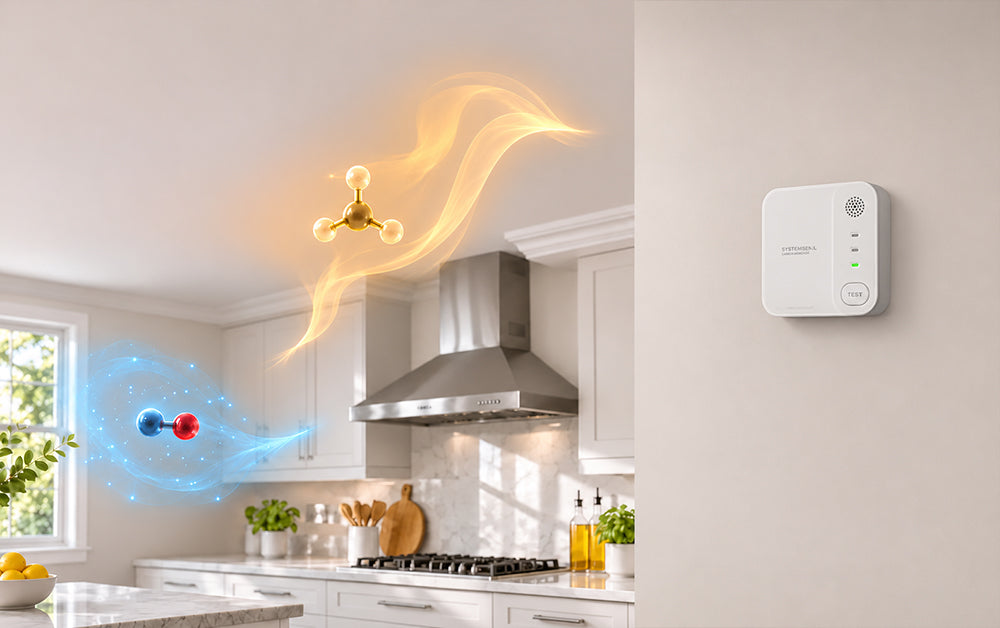
No. Natural gas is a fuel supplied to appliances such as ranges, furnaces, water heaters, and fireplaces. Methane is its primary component in many household gas supplies. Carbon monoxide is a toxic gas that can form when fuel does not burn completely, including at a malfunctioning or poorly vented appliance.
A gas appliance can therefore create two different risks: unburned fuel may escape through a leak, and combustion may produce CO. One alarm does not automatically cover both. A combination alarm can address both only when it is designed, listed, and installed for those hazards; otherwise, use the appropriate separate alarms.
Carbon monoxide has no smell. Utility natural gas is commonly odorized to help people notice a leak, but smell is not a substitute for a detector or a reason to delay leaving. Follow your gas utility’s emergency guidance if you suspect a leak.
Where should natural gas and CO detectors be installed?
There is no single mounting height that applies to every model. Follow the alarm’s manual, local code, and any instructions from the authority having jurisdiction. Room airflow, appliance location, ceilings, and the device’s approved installation method all matter.
Natural gas alarm placement
Methane is lighter than air, so a leak can move upward. That general property does not override the alarm manufacturer’s installation instructions. For the GS830A Series specifically, the manual instructs users to mount the unit on a wall within 12 inches (0.3 m) of the ceiling, at least 3 feet (0.9 m) and no more than 10 feet (3 m) from a gas appliance, and at least 5 feet (1.5 m) from a cooking appliance or cooktop hood. These are GS830A instructions, not a universal rule for every natural gas detector.
The same manual says not to install the GS830A outdoors, in a bathroom or damp area, near windows or doors, near a fan or HVAC duct, or where temperatures are below 32°F (0°C) or above 122°F (50°C). Read the complete manual for the approved mounting options and restrictions before installation.
Carbon monoxide alarm placement
Follow the CO alarm’s own instructions. The NFPA and U.S. Consumer Product Safety Commission home safety guidance recommends CO alarms outside each separate sleeping area and on every level of the home, plus other locations required by local law or code. For more CO placement guidance, see our guide to where to place a carbon monoxide detector. Smoke alarms are also needed in their required locations; a CO or gas alarm is not a substitute.
If a local rule applies, check its scope and current version. For example, the New York City Department of Buildings natural gas alarm FAQ covers specified building types and installation situations. Its requirements should not be generalized to homes in other jurisdictions.
Do you need separate alarms or a 2-in-1 natural gas and CO alarm?
Choose based on the hazards in the home and the exact certifications and instructions for each product. A residence may need CO alarms even without piped natural gas, for example if it has other combustion sources. A natural gas alarm does not replace those CO alarms, and neither replaces smoke alarms.
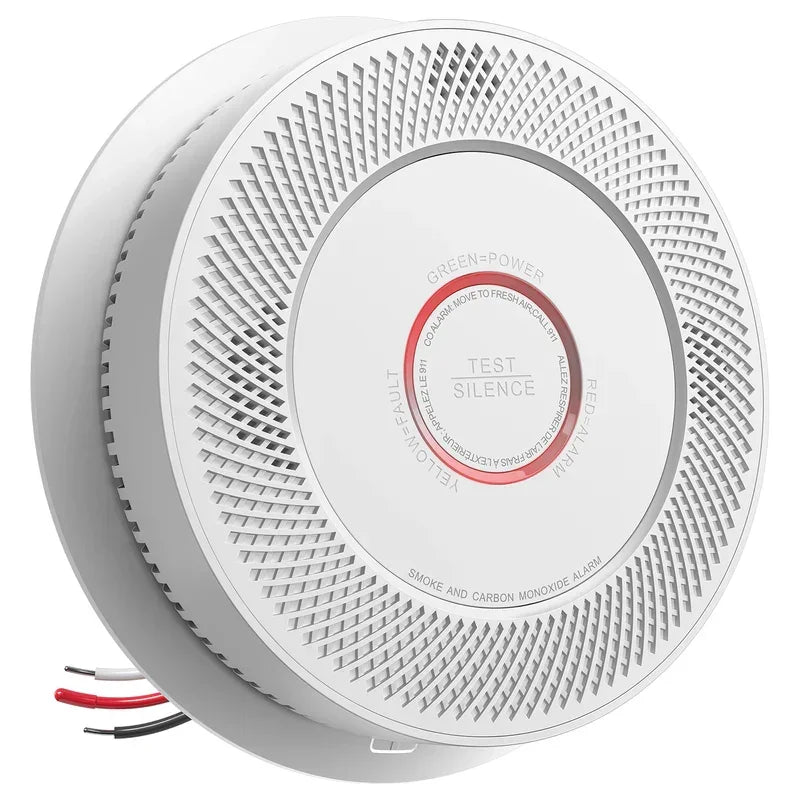
The Siterwell GS830A is a 2-in-1 natural gas and CO alarm intended for indoor residential use. The GS830A Series manual lists methane and CO detection, a 3V sealed lithium battery, a 10-year product life, and conformity with UL 1484 and UL 2034. It specifies a 10% LEL methane alarm threshold for this model. Those are model-specific details; verify the current packaging and manual for the exact version you buy.
The manual covers GS830A-NCDT and GS830A-BLDT. The BLDT version includes Bluetooth diagnostics through the Siterwell Link app; the manual does not describe Bluetooth as a replacement for the alarm’s on-device warning or emergency response. The GS830A is not specified for propane, RVs, boats, or smoke detection. See the Siterwell GS830A product page and its manual for current model and feature details.
For CO coverage near sleeping areas and across home levels, use alarms specifically designed and listed for CO and install them as directed. The Siterwell carbon monoxide alarm collection includes CO-only options. For fire protection, select separate smoke alarms or a smoke-and-CO combination alarm that is listed for both functions.
What should you do if a natural gas alarm or CO alarm sounds?
If a natural gas alarm sounds or you suspect a gas leak
- Leave immediately on foot. Do not stop to search for the leak, operate appliances, or open or close electrical equipment.
- Avoid ignition sources. Do not use a phone inside, operate light switches or other electrical devices, start a vehicle nearby, or use a flame.
- Call 911 from a safe location. Notify your gas utility from outside and do not re-enter until emergency responders or the utility say it is safe.
These steps follow PHMSA guidance for a suspected or detected natural gas leak. If you smell gas, act even if an alarm has not sounded.
If a CO alarm sounds
- Move everyone outside to fresh air immediately. Do not ignore the alarm because no odor is present.
- Call 911 from outside. Tell the dispatcher that a CO alarm sounded and report any symptoms.
- Do not re-enter until authorities say it is safe. Have fuel-burning equipment checked by a qualified professional before using it again.
Use the response pattern and instructions in your alarm’s manual. Do not silence or reset an alarm and remain inside when the cause has not been assessed.
Frequently asked questions
Does a carbon monoxide detector detect natural gas or beep during a gas leak?
A standard CO detector is not designed to detect unburned natural gas, so do not rely on it to warn you about a methane leak. Use a natural gas alarm or a combination alarm specifically designed and listed for natural gas and CO.
Is an explosive gas detector the same as a natural gas detector?
Not always. “Explosive gas” describes a hazard category, not necessarily the exact fuel a particular model detects. Check the alarm’s label and manual for the gases it is designed and listed to detect, such as methane or propane. Do not assume a methane alarm also covers propane.
Can a natural gas detector detect carbon monoxide?
Only if the product is specifically designed and listed to detect both gases. A standalone natural gas alarm should not be relied on for CO protection.
Does a CO detector detect propane?
No. A CO detector is not a propane leak alarm. Choose an alarm specifically rated for propane and install it according to that model’s manual and local requirements. The GS830A Series manual specifies methane and CO, not propane.
Can a 2-in-1 gas and CO alarm replace a smoke detector?
No. The GS830A Series manual says the product is designed for natural gas and CO, not smoke or fire. Install listed smoke alarms in the locations required for your home.
Where should I mount the Siterwell GS830A?
For GS830A Series units, the manual specifies wall mounting within 12 inches (0.3 m) of the ceiling, 3 to 10 feet (0.9 to 3 m) from gas appliances, and at least 5 feet (1.5 m) from cooking appliances or a cooktop hood. Follow the full manual and local requirements; do not apply these model-specific distances to another alarm.
How long does the GS830A last?
The GS830A Series manual lists a 10-year product life and a non-replaceable sealed lithium battery. Replace the entire alarm when it reaches end of life or if the manual instructs you to replace it sooner.
Choose alarms by hazard, then follow the manual
A CO detector does not provide natural gas leak protection unless it is a combination alarm specifically designed for both gases. Match each detector to the hazard, install it exactly as directed, and keep smoke alarms in place for fire protection. For a suspected gas leak or a sounding CO alarm, leave first and call for help from a safe location.
Compare the Siterwell GS830A natural gas and CO alarm and review its product manual to confirm whether its features and installation requirements match your home.