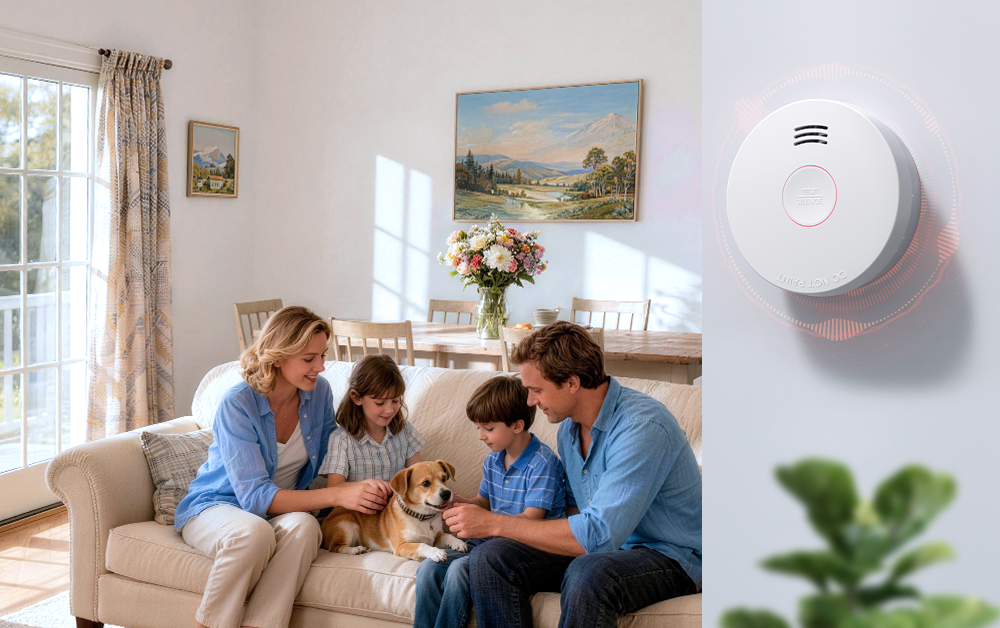
When it comes to protecting your family, every second counts. In the United States, a home fire occurs every 23 seconds, but having a working smoke alarm can cut the risk of dying in a home fire by half.
Whether you’re a new homeowner or just realized your current alarms are gathering dust, this guide will help you understand how these "silent guardians" work and how to choose the best protection for your household.
1. How Smoke Alarms Save Lives
Most fire-related fatalities aren't caused by heat or flames, but by smoke inhalation. A reliable smoke alarm acts as your 24/7 sentry, detecting early signs of fire even when you’re fast asleep.
Photoelectric vs. Ionization: What’s the Difference?
Not all alarms "see" fire the same way.
- Photoelectric Alarms (Recommended): These are exceptionally good at detecting slow, smoldering fires—the kind that create a lot of smoke and can smolder for hours before bursting into flames.
-
Ionization Alarms: These are generally more responsive to fast-flaming fires.
In 2026, photoelectric alarms are increasingly recommended for residential use due to their reliability in real-life fire scenarios.
For the best protection, look for high-quality photoelectric alarms like the Siterwell GS525A, which are designed to minimize "nuisance alarms" from cooking while staying hyper-vigilant against real threats.

2. Where Should You Install Them? (The 2-4-12 Rule)
To meet safety standards (like NFPA 72), proper placement is critical:
- Every Level: Install at least one alarm on every occupiable level of your home, including finished basements.
- In Every Bedroom: Every sleeping room needs its own alarm.
- Hallways: Place them in the hallway outside each separate sleeping area.
Pro-Placement Tips:
- Ceiling Mount: Place the alarm in the middle of the ceiling, at least 4 inches away from any side wall.
- Wall Mount: If mounting on a wall, ensure the top edge is between 4 and 12 inches below the ceiling.
- Avoid the Kitchen & Bathroom: Stay at least 10 feet away from cooking appliances and 3 feet away from bathrooms with showers to prevent false alarms from steam or smoke.

3. Maintenance: Set It and Forget It? (Not Quite!)
A smoke alarm is only a "guardian" if it has power and a clear sensor.
- Test Monthly: Simply press the "Test" button once a month to ensure the horn and circuitry are functional.
- Clean Yearly: Dust and insects can cause false alarms. Use a vacuum with a soft brush to clean the unit once a year.
- The 10-Year Rule: All smoke alarms have an expiration date. Replace your entire unit every 10 years from the manufacture date.

4. Why Choose the Siterwell GS525A?
If you're looking for a hassle-free solution, our GS525A model is engineered specifically for modern residential safety:
- 10-Year Battery Life: Features a built-in 3V Lithium battery—no more annoying midnight "low battery" chirps for a full decade
- Compliant Safety: Fully complies with UL 217 standards.
- Loud & Clear: An 85dB alarm pattern that ensures you and your family wake up when it matters most.
- Hush Feature: Easily silence nuisance alarms (like burnt toast) with a single press.
Conclusion
Investing in high-quality smoke alarms is the simplest and most effective way to protect what matters most. Don't wait for an emergency to find out if your home is protected.
Ready to upgrade your home safety: Siterwell Reliable Smoke Detectors.